
GoldenLeaf Sports14+ Years Teamwear Manufacturer · Shenzhen, China

What Is the Best Cricket Uniform Manufacturer in China?

Time:2026-10-14 Author:Amelia
0%

Choosing the best Cricket Uniform manufacturer in China requires more than comparing prices. A reliable partner must combine fabric knowledge, consistent production, accurate sizing, and responsive communication. This matters because cricket clothing faces repeated washing, intense sunlight, sweat, and frequent movement. A weak seam can open during a match. A poorly graded sleeve can restrict a bowler’s delivery.

Market data also shows why supplier evaluation deserves careful attention. Grand View Research estimated the global sports apparel market at approximately USD 248.8 billion in 2023, with continued growth expected through 2030. McKinsey and the World Federation of the Sporting Goods Industry have also reported strong long-term expansion across sporting goods and activewear. These figures suggest rising competition, but they do not prove that every factory offers equal quality. That distinction is often overlooked.

The strongest Chinese manufacturers usually provide pre-production samples, fabric test results, size charts, and transparent quality procedures. Buyers should check colorfastness, fabric weight, moisture management, seam strength, embroidery accuracy, and packaging before approving bulk production. Textile Exchange’s Materials Market Report 2024 also highlights the growing importance of recycled fibers and material traceability. Sustainability claims need evidence, not attractive labels.

There is no perfect supplier.

A practical comparison should include factory experience, export references, production capacity, minimum order quantities, and after-sales support. Visiting a facility can reveal details that emails hide, such as crowded cutting tables or inconsistent inspection records. This guide examines those factors to identify which Cricket Uniform manufacturer in China offers dependable value, not merely the lowest quotation. Some conclusions may remain imperfect, because supplier performance can change with each order, season, and production team.
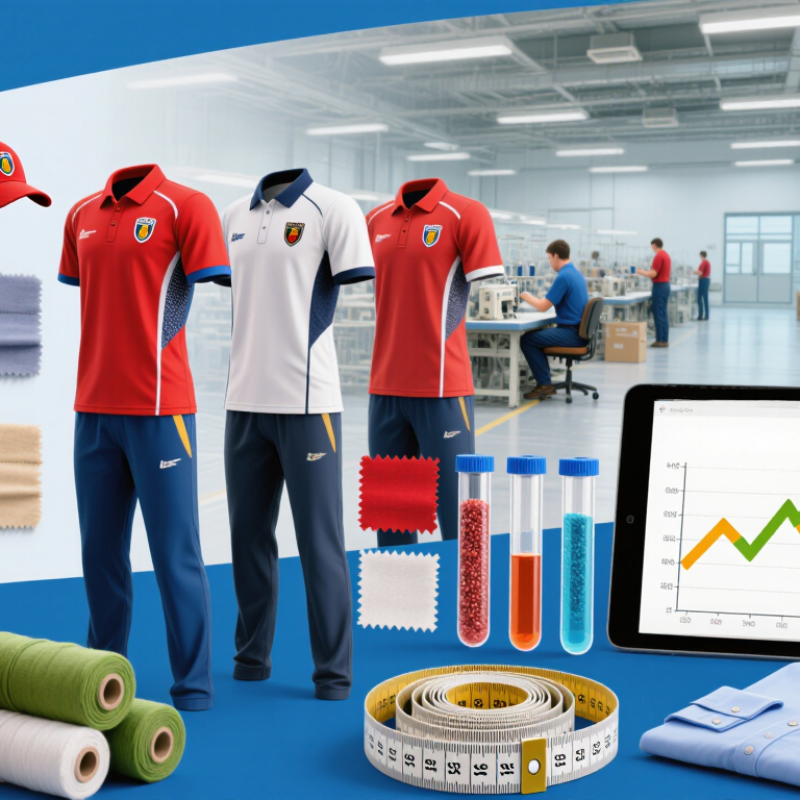
What Is the Best Cricket Uniform Manufacturer in China?

What Defines the Best Cricket Uniform Manufacturer in China?

The best cricket uniform manufacturer in China is defined by repeatable performance, not attractive catalog photos. A serious supplier understands movement, heat, abrasion, and frequent washing. Fabric should remain light after sweat, while seams must survive diving and sliding. Ask for fabric weight, fiber content, shrinkage results, colorfastness results, and independent test records. Vague answers are warning signs.

Textile Exchange’s 2024 Materials Market Report states that polyester represented 59% of global fiber production in 2023. That explains its popularity in moisture-managing cricket garments, but polyester alone proves little. The better question concerns yarn quality, knitting structure, recycled content verification, and finishing chemicals. A reliable factory can provide batch-level records. It should also explain whether printing may crack after repeated washing. Small details matter.

Quality control must be visible. Look for documented sampling, measurement charts, needle inspections, and pre-shipment checks. AQL sampling can reduce inconsistent sizing, though it cannot replace careful human review. Request a pre-production sample, then wash it several times. Check collar recovery, sponsor-panel alignment, trouser stretch, and seam comfort under pads. Do not trust one perfect sample. Production can differ.

Grand View Research estimated the global sports apparel market at about USD 203.9 billion in 2023, with continued growth expected through 2030. That growth increases supplier choices, not necessarily supplier competence. The strongest manufacturer combines technical knowledge, transparent communication, stable lead times, and responsible material documentation. Perfection is unlikely. Honest correction is more valuable.

Key Factors for Evaluating Chinese Cricket Uniform Manufacturers

What Is the Best Cricket Uniform Manufacturer in China?

Choosing the best cricket uniform manufacturer requires more than comparing online prices. A reliable supplier should understand match conditions, player movement, and repeated washing. Ask for fabric samples before discussing large orders. Polyester blends should feel breathable, resist pulling, and dry quickly after heavy use.

Inspect the stitching around shoulders, side panels, and trouser seams. These areas often receive the most stress during batting and fielding. Request a physical sample with your intended logo, colors, and size chart. Check whether the printing remains sharp after several washes. Test it properly. A supplier that welcomes practical testing usually shows stronger manufacturing confidence.

Production control is equally important. Ask how the factory checks measurements, fabric weight, color consistency, and loose threads. Clear inspection records can reduce surprises during delivery. Experienced manufacturers should explain lead times, replacement procedures, and packaging details without vague promises. Communication matters. Slow or unclear replies may create problems when tournament dates are close.

References from previous team customers can reveal useful details about durability and service. However, references are not perfect proof. A supplier may perform well for one order and poorly for another. Request a small trial order when possible. Review the finished uniforms yourself, including collar shape, seam comfort, and player numbering. I have found that attractive samples can hide uncomfortable fabric or inconsistent sizing. Careful evaluation remains necessary.

How Cricket Uniform Manufacturers Design and Produce Team Kits

A capable cricket uniform manufacturer treats a team kit as performance equipment, not decoration. Design begins with player roles, climate, match rules, and washing habits. A wicketkeeper needs flexible shoulders and durable knee-area fabric. A fast bowler needs stretch, airflow, and secure seams. Grand View Research valued the global sports apparel market at approximately $248.15 billion in 2023. This figure shows strong demand, but market size alone proves nothing.

Manufacturers convert team requirements into a technical specification sheet. It records measurements, fabric weight, color references, logos, stitching, and tolerance limits. Lightweight polyester often supports moisture management and quick drying. Textile Exchange’s Materials Market Report 2024 reported 124 million tonnes of global fiber production in 2023. Polyester represented about 57 percent of that volume. This data makes fiber selection important, while supplier verification remains essential. Claims about recycled content should be documented, not guessed.

Production usually moves from digital artwork to graded patterns, sample cutting, printing, sewing, and inspection. Sublimation can create detailed graphics without heavy surface layers. However, poor heat control may distort colors or weaken fabric. A sample may fit perfectly on one athlete and feel restrictive on another. That is an uncomfortable, common limitation. Experienced teams test garments through movement drills, repeated washing, seam checks, and color comparison under daylight. Before bulk production, inspectors should review size measurements, thread tension, numbering, and packaging. Small errors become expensive when hundreds of shirts are already finished.

Comparing Customization, Quality, Pricing, and Production Capacity

Choosing the best cricket uniform manufacturer in China requires more than comparing quotations. Customization should cover collar shape, sleeve length, player numbers, sponsor panels, and fabric weight. A capable factory can convert artwork into a digital sample before cutting. Ask whether one approved sample remains as a production reference. This step helps prevent shade differences across shirts. In practical sourcing work, clear communication often matters more than a low opening price. Design changes can still create delays.

Quality depends on fabric recovery, stitching tension, seam strength, and print durability. Test a sample after repeated washing and outdoor use. Check whether the lettering stays sharp after stretching. A 140–160 GSM polyester fabric may suit warm training conditions, while heavier fabric can feel stronger during matches. Pricing should include sampling, artwork adjustments, packaging, and shipping preparation. Cheap can become expensive. Compare the complete production cost, not only the unit price.

Production capacity also deserves close attention. Request the monthly output, standard lead time, minimum order quantity, and current scheduling method. A large factory may produce thousands of shirts, yet quality control can weaken during busy seasons. Ask for inspection records, fabric batch details, and photos from several production stages. A smaller workshop may offer better attention but struggle with urgent team orders. I would not treat certificates or polished photographs as conclusive proof. An independent sample inspection remains useful, although it adds time and cost. Even experienced buyers can overlook sleeve symmetry or color variation.

How to Select the Right Cricket Uniform Manufacturer in China

Selecting the right cricket uniform manufacturer in China requires more than comparing catalog photos. Start with fabric performance, not slogans. Ask for fabric weight, fiber composition, colorfastness results, and seam-strength records. For match shirts, request a wash test using your actual artwork and sizing chart. A bright sample proves little. The Textile Exchange Materials Market Report 2024 recorded 124 million tonnes of global fiber production in 2023. It projects 160 million tonnes by 2030, increasing pressure for traceable material choices.

A capable supplier should explain production capacity, minimum order quantity, sampling time, and peak-season lead times clearly. Request a factory video call, production photos, and recent third-party inspection records. Check whether one team controls cutting, sublimation, stitching, and final inspection. Separated processes can create shade differences or crooked sponsor panels. The WTO World Trade Statistical Review 2024 places China at roughly one-third of global clothing exports in 2023. However, national scale does not guarantee factory quality.

Before signing, approve a sealed reference sample. Measure the collar, sleeve opening, hem, and player-number placement. Then match every bulk shipment against it. Ask for batch records and a corrective-action process. Sustainability claims deserve evidence, such as recycled-content certificates and transaction records. I would avoid the cheapest quote when it omits testing or realistic delivery buffers. That choice can become expensive during a tournament. No checklist is perfect; even experienced buyers should allow for one failed sample and honest review.

What Is the Best Cricket Uniform Manufacturer in China? - How to Select the Right Cricket Uniform Manufacturer in China
Selection Dimension Recommended Benchmark Why It Matters for Cricket Uniforms Evidence to Request Suggested Priority
Cricket-Specific Experience Demonstrated experience producing match shirts, trousers, sweaters, training wear and caps. Cricket garments require freedom of movement, durable seams and designs that work across batting, bowling and fielding activities. Product catalogue, sample set, anonymized production photos and references for comparable sportswear orders. High
Fabric Performance Moisture-wicking polyester or polyester blends, with fabric weight and composition clearly specified. Breathable, quick-drying fabric helps players remain comfortable during extended matches and training sessions. Fabric composition, weight in GSM, test reports and a physical fabric swatch. High
Colorfastness and Printing Color and logo decoration should remain stable after repeated washing and normal sports use. Team uniforms need consistent colors and durable graphics throughout a season. Washing-test results, print or sublimation samples, care instructions and approval samples. High
Sizing and Fit A documented size chart covering youth and adult sizes, with garment measurements and tolerances. Accurate sizing reduces returns and ensures players can move comfortably without excessive looseness or restriction. Size chart, measurement specification, fit sample and pre-production approval procedure. High
Customization Capability Support for sublimation, embroidery, heat-transfer graphics, names, numbers and custom colorways. Clubs and schools often require unique team identity, player personalization and sponsor placement. Decoration samples, artwork requirements, color-management process and digital mock-up. High
Minimum Order Quantity MOQ should match the order size of the club, academy, school or distributor. A low or flexible MOQ is useful for trial orders, new teams and replacement garments. Written MOQ by style, size, color and decoration method, including sample-order terms. Medium
Sample and Approval Process Pre-production samples should be reviewed and approved before bulk manufacturing. Sampling helps verify fit, fabric, colors, artwork placement and construction before the full order is made. Sample timeline, revision policy, approval form and sample cost arrangements. High
Quality-Control System Quality checks should cover incoming fabric, cutting, sewing, decoration, measurements and final packing. Multiple inspection stages reduce defects such as loose threads, incorrect sizes, uneven seams and print errors. Inspection checklist, defect policy, batch photos and an agreed final-inspection standard. High
Relevant Compliance Testing Materials and finished garments should be tested according to the destination market and buyer requirements. Testing can help address requirements relating to restricted substances, product safety and market compliance. Applicable laboratory reports, material declarations and certifications that can be independently verified. High
Production Capacity Capacity should be sufficient for the required quantity while maintaining the agreed delivery schedule. Capacity planning is important for seasonal teamwear, tournament deadlines and repeat replenishment orders. Production schedule, lead-time estimate, capacity confirmation and contingency plan for peak periods. High
Lead Time The quotation should separate sample lead time, bulk production time and shipping time. Clear timelines help buyers coordinate team registration, tournaments and seasonal product launches. Written production calendar, order milestones and delay-notification procedure. High
Communication and Technical Support A dedicated contact should provide clear responses, artwork checks and written order confirmations. Accurate communication reduces misunderstandings about measurements, colors, quantities and player personalization. Response-time expectations, communication workflow, specification sheet and change-control process. Medium
Cost Transparency The quotation should itemize garment price, customization, sampling, packaging, tooling and shipping. Transparent pricing makes supplier comparisons more accurate and helps prevent unexpected charges. Formal quotation, payment terms, price-validity period and a list of possible additional fees. High
Packaging and Labeling Individual packing, size labels, care labels and carton markings should follow the buyer’s instructions. Correct packaging protects garments during transport and simplifies distribution to players or retail customers. Packaging samples, carton dimensions, packing list and labeling artwork. Medium
Export and Logistics Capability The supplier should provide suitable export documentation and shipping options for the destination country. Accurate documentation and reliable logistics reduce customs delays and delivery risks. Commercial invoice, packing list, shipping terms, estimated transit time and previous export documentation with sensitive data removed. High
After-Sales and Reorder Support The supplier should retain approved specifications and support repeat orders or replacement garments. Teams often need additional sizes, late orders or replacement items during the playing season. Reorder policy, specification-retention period, replacement terms and process for handling verified defects. Medium

FAQS

How can I evaluate a cricket uniform manufacturer in China?

Request fabric samples and a physical uniform sample. Check breathability, drying speed, stitching, and size accuracy. Test it properly.

Which fabric details matter for cricket uniforms?

Polyester blends should feel breathable and recover after stretching. Fabric around 140–160 GSM may suit warm training conditions. Heavier fabric can feel stronger during matches.

What parts of a sample uniform need close inspection?

Examine shoulder seams, side panels, collars, and trouser seams. These areas face repeated movement and stress. Look for loose threads.

How should I test printing and numbering?

Apply your intended artwork to the sample. Wash it several times and stretch the fabric afterward. Lettering should remain sharp and firmly attached.

What customization options should a capable supplier provide?

Discuss collars, sleeve lengths, player numbers, sponsor panels, colors, and fabric weight. Ask for a digital sample before cutting begins.

How can I compare uniform prices accurately?

Compare the complete cost, including sampling, artwork changes, packaging, and shipping preparation. A low unit price may hide extra charges. Cheap can become expensive.

What production information should I request?

Ask about monthly output, minimum order quantity, lead time, and current scheduling. Request fabric batch details and inspection records. Busy seasons may reduce consistency.

Is a large factory always the best choice?

Not necessarily. A large factory may handle thousands of shirts but miss small defects. A smaller workshop may offer closer attention but struggle with urgent orders.

How can I reduce sizing and color problems?

Approve one physical sample as the production reference. Check sleeve symmetry, collar shape, seam comfort, and shade consistency. I still might miss something.

Are certificates, photographs, and customer references enough proof?

No. They provide useful clues, not complete proof. Request a small trial order and inspect the finished uniforms yourself. This adds time, but often prevents costly surprises.

Conclusion

Choosing the best Cricket Uniform manufacturer in China requires more than comparing prices. A reliable supplier should offer strong fabric quality, accurate sizing, durable stitching, breathable materials, and consistent color performance. Important evaluation factors also include customization options, communication, sample development, production standards, quality control, delivery reliability, and the ability to manage both small and large team orders. A professional manufacturer should understand cricket’s movement requirements and create kits that provide comfort, flexibility, and long-term performance.

The design and production process usually begins with artwork confirmation, fabric selection, size planning, and sample approval. Buyers should compare customization flexibility, material quality, total cost, minimum order quantities, production capacity, and after-sales support. The right manufacturer will provide clear timelines, transparent quotations, careful inspections, and practical recommendations without compromising the team’s design goals. By reviewing samples, confirming technical details, and assessing production experience, teams can select a dependable Chinese partner capable of delivering attractive, comfortable, and consistently made cricket uniforms.

Amelia

Amelia

Amelia is a seasoned marketing professional with a wealth of expertise in our company’s core offerings. With an unwavering passion for driving growth and innovation, she plays a pivotal role in shaping our marketing strategies and enhancing brand visibility. A key aspect of her responsibilities......