
Buying Football Jerseys wholesale is not just a matter of choosing popular colors. Buyers must weigh licensing, fabric quality, sizing consistency, delivery times, and the needs of their customers. A shirt that looks sharp under stadium lights can feel heavy in a small shop. Details matter.
The commercial context is substantial, but it needs careful reading. Deloitte’s 2024 Football Money League reported that the 20 highest-earning clubs generated a record €10.5 billion in revenue during the 2022/23 season. That figure covers all club revenue, not jersey sales alone. It signals the scale of football’s commercial ecosystem, rather than proving demand for any specific design. Sports-business scholar Simon Chadwick has described football as “a global business.” For wholesale buyers, that means club identity and fan loyalty can shape demand, but they cannot guarantee sell-through.
This guide introduces 10 jersey options for wholesale consideration, from classic home designs to training and fanwear styles. It focuses on practical buying questions: who the product serves, what quality cues to check, and where stock risks may hide. Fabric feel. Stitching. Size runs. These are small checks with real consequences. The selection is a starting point, not a universal ranking; local teams, seasons, and customer budgets change what sells. Even a well-made list can miss something. Buyers should verify current licensing, supplier terms, and sample quality before placing a large order.
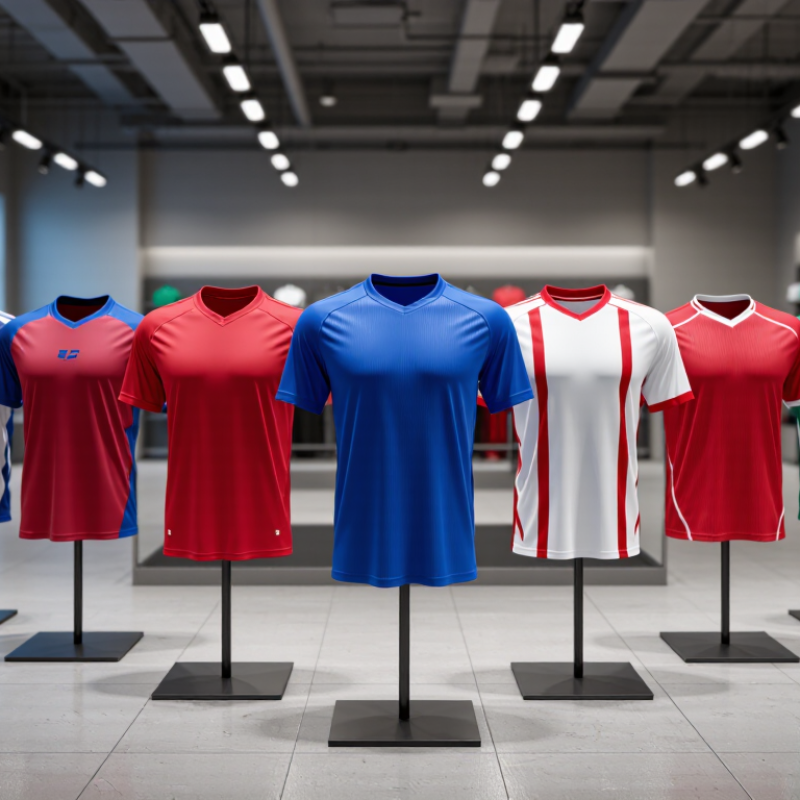
FIFA estimated that about five billion people engaged with the 2022 World Cup. That figure reflects broad global attention, not five billion stadium visitors or necessarily unique viewers. For wholesale buyers, the scale matters: supporters follow matches from packed cafés, living rooms, and local pitches. Their jersey needs differ. Some want a lightweight performance shirt; others prefer a lower-priced replica for everyday wear.
A practical range can include replica jerseys, authentic-style match shirts, training tops, retro designs, youth sizes, and goalkeeper styles. Each serves a different customer and price point. Check fabric weight, stitching, size consistency, and colorfastness before placing a large order. Ask for samples. A neat product photo cannot show how a collar feels after repeated washing.
Tournament attention can create short buying windows, but demand is rarely uniform. National-team designs may sell quickly in one market and sit on shelves in another. That is easy to misjudge. Use local sales history, customer feedback, and modest test orders to guide quantities. The five-billion figure shows reach; it does not predict which sizes or styles your customers will choose.
Wholesale buyers serving audiences across 211 FIFA member associations need variety, not one generic cut. A practical range can include ten styles: home away alternate classic-inspired training short-sleeve long-sleeve youth goalkeeper supporter replica jerseys. Each serves a different use, from match-day color choices to practice sessions and cooler weather. Fit varies. Check chest width, body length, and sleeve measurements before setting size ratios.
Association colors and local preferences can shape demand, but they do not predict it perfectly. A bright alternate design may sell well in one market and sit untouched in another. That happens. Start with smaller mixed-size orders, then track sell-through by style and size.
Fabric weight also matters: breathable mesh feels useful in hot conditions, while heavier material may suit cooler seasons. Ask suppliers for fabric details and sample garments, rather than relying on product photos alone.
Tips: Compare stitching, color consistency, and printed details on a physical sample. Keep a simple record of returns and customer fit comments; those notes can reveal sizing issues that sales totals miss. Don’t overbuy a style just because it looks popular online.
For bulk orders, fabric choice matters as much as the jersey’s look. Polyester is common because it is light, durable, and dries relatively quickly. Knit structure affects airflow: open mesh panels can feel cooler, while tighter knits may offer more coverage. Check GSM alongside the fabric type. Many performance jerseys fall around 140–180 GSM, but construction and intended use can shift the ideal weight. Lighter is not always better. A thin fabric may snag or feel less substantial after repeated wear.
Moisture-wicking performance depends on yarn, knit, and finishing, not just a product label. Look for fabric that moves sweat away from the skin and dries evenly. Ask for a swatch and test it after washing; some finishes lose effectiveness over time. Check seams, printed areas, and ventilation zones too. A jersey can feel breathable on a hanger but warmer during active play. That detail is easy to miss.
Tips: Request a production sample before confirming quantities. Compare GSM, stretch, opacity, and drying time under the same conditions. Record results, even if they seem obvious. Recheck sizing across several sample pieces; small inconsistencies can become costly in a bulk order.
Wholesale jersey orders work best when size curves reflect actual buyers, not a generic “standard” chart. ISO 8559-1 describes methods for measuring the human body, but it does not set one universal football-shirt fit. Measure chest, body length, and sleeve length on a sample, then compare them with customer measurements. Grand View Research estimated the global sports apparel market at USD 216.9 billion in 2023. That figure signals a large category, but it cannot predict your local size mix. Start with a test order and adjust using sell-through data. Fit varies.
For customization, approve a production-ready mock-up before placing the full order. Check name spelling, number readability, badge placement, color contrast, and print durability. Request fabric details and wash-test results, and keep one approved sample for comparison. A small detail can cause a costly reprint.
FIFA’s Equipment Regulations specify competition requirements for items such as colors, numbers, and team identification. They are not a universal template for every retail or wholesale order. For team orders, confirm the relevant organizer’s current rules and approval requirements for official insignia. Grand View Research’s Sports Apparel Market Size, Share & Trends Analysis Report, 2024–2030, provides useful market context; your own order history remains the better guide to sizing. I would still recheck the size curve after each season.
For wholesale football jerseys, compare landed unit cost, not just the factory quote. Ask suppliers to price several order volumes and separate garment, printing, packaging, and freight costs. Small lots cost more. A low minimum order quantity can help test sizing and color consistency, but it may raise the cost per shirt. Confirm whether repeat orders use the same fabric specification and color references.
Lead time needs a buffer. UNCTAD’s Review of Maritime Transport 2024 reported that Suez Canal transits fell 42% from their peak over two months amid shipping disruptions. That figure is not a jersey-delivery forecast, but it shows why buyers should request separate production and transit estimates. Get milestone dates for sample approval, bulk cutting, inspection, and dispatch. Ask what happens if fabric arrives late. Not always clear.
Quality-control terms should be written before payment. Use a signed sample to define measurements, fabric weight, print placement, and acceptable color variation. ISO 2859-1 provides sampling plans for attribute inspection; agree the inspection level and defect categories with the supplier rather than assuming one universal AQL. Check stitching at the shoulder seams, stretch recovery, and print cracking after washing. A cheaper quote may still be worthwhile, but only when the inspection record supports it. One overlooked detail: request photos of packed cartons and carton labels before dispatch.
Measure chest, body length, and sleeve length on a sample. Compare those figures with customer measurements. Fit varies.
Not reliably. Local buyers may prefer different fits, so test a small order. Adjust the size mix using actual sales.
Check name spelling, number readability, badge placement, and color contrast. Approve a production-ready mock-up before ordering in bulk.
Request fabric details and wash-test results. Keep one approved sample to compare with the finished jerseys. Small details matter.
No. Requirements can depend on the team or competition. Confirm current organizer rules before adding official insignia.
Compare landed cost per jersey, including garment, printing, packaging, and freight. Ask for prices at several order volumes.
Request separate estimates for production and transit. Get milestone dates for sample approval, cutting, inspection, and dispatch. Delays happen.
Use a signed sample to define measurements, fabric weight, print placement, and acceptable color variation. Agree on inspection levels and defect categories.
Check shoulder seams, stretch recovery, and print cracking after washing. Request photos of packed cartons and labels. I would recheck the size curve each season.
This guide explores how Football Jerseys serve a global audience, with football’s reach spanning billions of fans and national teams across 211 FIFA member associations. It introduces ten popular wholesale jersey styles, from classic match-inspired designs to training and fanwear options, and explains how fabric choice, GSM, breathability, and moisture-wicking performance affect comfort, durability, and value in bulk orders.
Wholesale buyers will also find practical guidance on size ranges, customization options, and responsible checks on official kit requirements. The article outlines how to compare minimum order quantities, unit prices, production lead times, and quality-control standards before choosing a supplier. By weighing these factors together, buyers can plan orders that suit their customers, budget, and delivery schedule while maintaining consistent sizing, construction, and finish across a large shipment.
