
Lacrosse Sportswear is more than a jersey with a team logo. It is a performance system designed for sprinting, checking, passing, and repeated contact. A reliable garment should manage sweat, resist tearing, and allow unrestricted shoulder movement. Mesh panels can improve airflow, while reinforced seams protect high-stress areas. Fit matters too. A loose sleeve may catch during play. A tight shoulder can limit a powerful pass. Buyers should examine fabric weight, stretch recovery, abrasion resistance, and colorfastness before placing large orders. These details often reveal quality more clearly than attractive product photos.
Sourcing Lacrosse Sportswear requires a clear product brief and a supplier verification process. Specify the intended age group, playing level, climate, size range, decoration method, packaging, and delivery schedule. Request a physical sample, not only a digital rendering. Test it through washing, movement, and light abrasion. Ask the factory for material composition, production experience, quality-control records, and relevant certifications. A qualified supplier should explain its minimum order quantity and correction policy clearly. However, no checklist guarantees a perfect result. Samples may perform well while bulk production varies. Independent inspections and written approval standards can reduce that risk. Pricing also deserves careful judgment. The lowest quote may hide weaker fabric, inconsistent sizing, or limited after-sales support. This guide explores product construction, supplier selection, customization, cost factors, and practical quality checks. The aim is simple: help buyers make informed decisions and build safer, more dependable teamwear programs.
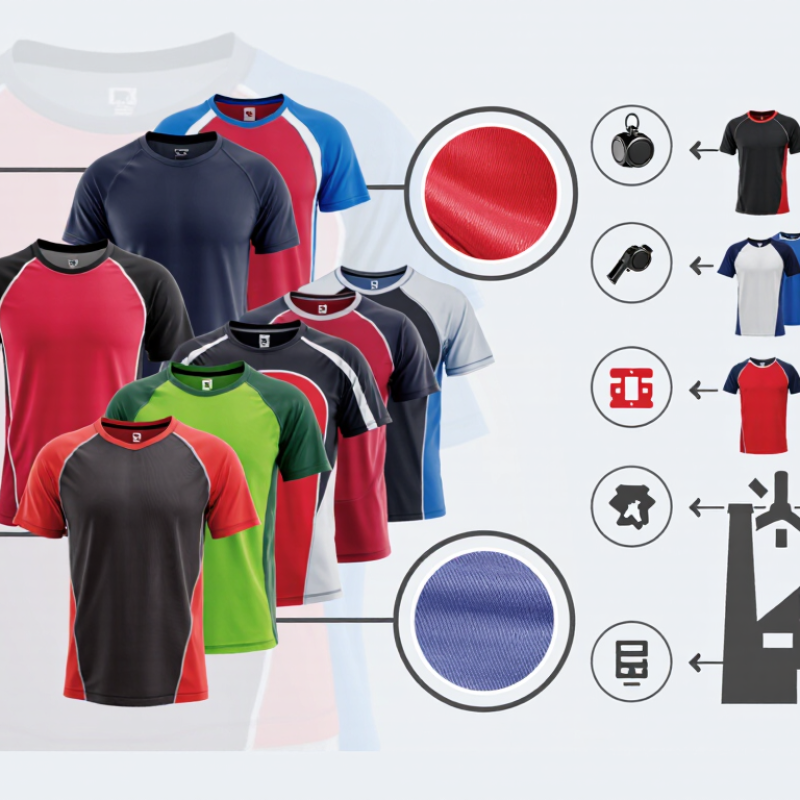
Lacrosse sportswear is the clothing and protective equipment used during training and competition. It is not just a uniform. A typical set includes a moisture-managing jersey, athletic shorts or a skirt, performance socks, and suitable cleats. Jerseys usually use breathable mesh panels for airflow. Reinforced seams help them survive repeated contact and washing. Shorts often include stretch fabric, allowing quick cuts and wide defensive stances.
Protective items are equally important. Depending on the playing position and rules, players may need helmets, gloves, shoulder protection, arm guards, and mouthguards. Goalkeepers usually require extra chest protection and specialized gloves. When sourcing these products, check the fabric weight, stitching, padding thickness, ventilation, and size measurements. A garment can look strong but still restrict shoulder movement. That mistake is easy to miss in a product photo.
Fit needs real testing. Ask players to run, bend, raise their arms, and hold a stick while wearing the full set. Loose sleeves may catch during play, while tight padding can create pressure points. I would also request wash tests and colorfastness checks before placing a large order. Samples can feel excellent at first, yet shrink after several washes. This is where product decisions become less certain. Cost matters, but unreliable sizing can create more waste than a higher unit price. A clear size chart and consistent grading make reordering easier.
Lacrosse sportswear is more than a team uniform. It combines breathable jerseys, flexible shorts, protective layers, socks, and training apparel. In regular fitting sessions, I look for fabric that dries quickly after repeated sprints. A damp shirt can add weight and distract a player. Small details matter. Flat seams reduce rubbing under shoulder pads. Stretch panels allow a defender to turn without pulling across the back. Mesh zones can improve airflow, but excessive mesh may expose skin during contact.
Player performance depends on controlled movement. Lightweight materials help athletes accelerate, cut, and cradle the stick with less restriction. Secure waistbands keep shorts in place during sudden direction changes. For safety, sportswear should work with helmets, gloves, shoulder protection, and arm guards. It must not cover vision or create loose edges that catch equipment. Proper padding remains essential; clothing cannot replace certified protective gear. Sizing should be checked while wearing base layers, not over a thin shirt alone.
When sourcing lacrosse sportswear, buyers should request fabric composition, seam construction, wash testing, and size measurements. Ask how colors hold after repeated washing. Confirm whether measurements remain consistent across production batches. I have found that attractive samples sometimes hide weak stitching. That mistake is easy to miss. A practical trial should include sprinting, bending, stick handling, and controlled contact. Players should report hot spots, restricted movement, and slipping waistbands. No product is perfect. Feedback may reveal that softer fabric sacrifices durability, or extra ventilation reduces protection during rough play.
| Product Category | Typical Materials and Construction | Performance Function | Safety Contribution | Useful Sourcing Specifications | Quality and Compliance Checks |
|---|---|---|---|---|---|
| Game Jersey | Polyester or polyester-blend knit with breathable mesh panels and reinforced seams. | Low fabric weight, stretch, and air permeability help players move freely and manage heat during intense activity. | A secure fit and durable construction reduce snagging, excessive movement, and seam failure during contact. | Fabric weight commonly specified around 120–180 g/m²; request size range, stretch direction, seam type, and colorfastness requirements. | Check dimensional stability after washing, print adhesion, seam strength, pilling resistance, and color migration. |
| Game Shorts | Moisture-managing woven or knit fabric with a stretch waistband, drawcord, and reinforced high-stress areas. | Stretch and a stable waistband support sprinting, dodging, lunging, and repeated changes of direction. | A non-slip waist fit and smooth internal seams can reduce chafing and distraction during play. | Request inseam options, waistband recovery, pocket requirements, drawcord construction, and abrasion resistance. | Perform stretch-recovery testing, laundering trials, seam inspection, and wearer fit tests in running and crouching positions. |
| Compression Base Layer | Close-fitting nylon, polyester, or elastane blend with flatlock seams and targeted mesh zones. | Provides a smooth next-to-skin layer, supports moisture transfer, and helps maintain coverage under protective equipment. | Flat seams and appropriate compression reduce rubbing and help limit exposed skin during movement. | Specify body-mapped stretch, garment pressure preference, sleeve length, UPF testing if required, and odor-control claims only when verified. | Check recovery after repeated stretching, seam comfort, opacity, wash durability, and chemical safety documentation. |
| Padded Protective Shirt | Stretch performance fabric combined with removable or fixed foam panels around the ribs, shoulders, or upper arms. | Maintains mobility while adding impact-absorbing coverage in commonly exposed areas. | Foam padding can distribute and reduce some contact forces, but it does not replace certified helmets or required protective equipment. | Define pad location, foam type, thickness, density, coverage map, ventilation zones, and removable-pad construction. | Request impact-test evidence for stated claims, inspect pad retention, verify no hard edges, and test fit under shoulder equipment. |
| Shoulder and Arm Protection | Molded plastic or composite shells, energy-absorbing foam, adjustable straps, and breathable liners. | Allows arm rotation and stick handling while covering the shoulders, chest, and upper arms. | Helps reduce injury risk from legal body contact and incidental impacts when properly fitted and secured. | Specify coverage areas, shell flexibility, adjustment range, ventilation, closure system, and youth or adult sizing. | Confirm current governing-body requirements, inspect shell edges and straps, and conduct movement and retention tests. |
| Protective Gloves | Synthetic or leather-like outer material, padded fingers and backhand, flexible thumb construction, and adjustable wrist closure. | Balances grip, stick control, flexibility, and ventilation during passing, catching, and shooting. | Padding and a secure wrist closure help protect the hands from stick contact and accidental impacts. | Specify palm material, finger articulation, ventilation openings, closure adjustment, size increments, and replacement-part availability. | Check grip when wet, finger mobility, stitching, padding placement, odor resistance, and conformity with applicable competition rules. |
| Helmet and Head Protection | Rigid outer shell, energy-absorbing liner, face mask, chin protection, and adjustable retention system. | Provides visibility, ventilation, and a stable fit without restricting head movement. | Lacrosse helmets should meet the applicable current certification and competition requirements; correct fit and fastening are essential. | Request certification status, model configuration, size range, adjustment system, replacement policy, and manufacturing traceability. | Verify current NOCSAE requirements or the relevant local governing-body standard, certification labeling, shell condition, and retention performance. |
| Arm Guards and Elbow Pads | Flexible foam, molded caps, elastic sleeves, and adjustable straps designed to stay in position. | Supports unrestricted elbow flexion and stick handling while adding localized protection. | Covers vulnerable joints and helps distribute impact away from the elbow and forearm. | Define protective coverage, pad thickness, articulation points, sleeve compression, closure type, and circumference measurements. | Test retention during repeated arm motion, inspect exposed edges, evaluate heat buildup, and verify size grading. |
| Performance Socks | Synthetic fibers with elastic support, cushioned zones, arch construction, and reinforced heel and toe areas. | Helps manage moisture, reduce bunching, and improve comfort inside athletic footwear. | Cushioning and a secure fit may reduce friction-related discomfort and blister risk. | Specify sock height, cushion level, size range, elastic recovery, ventilation zones, and yarn composition. | Conduct wash tests, check shrinkage, assess seam placement, and verify colorfastness and fiber labeling. |
| Training Apparel | Lightweight training tops, shorts, warm-up layers, and weather-resistant outerwear using stretch synthetic fabrics. | Layering options help players adapt to temperature, wind, rain, and changing training intensity. | Reflective details can improve visibility in low-light conditions when appropriately positioned and tested. | Specify insulation level, waterproof or water-resistant performance, breathability, reflective area, and packability. | Check hydrostatic or spray-test results where claimed, zipper function, reflective durability, and seam construction. |
| Custom Team Uniform Set | Coordinated jersey, shorts, socks, and optional warm-up pieces with printed, sublimated, or sewn graphics. | Consistent sizing and coordinated construction simplify team use and support unrestricted movement. | Correct sizing, secure closures, and non-abrasive decoration help limit discomfort and equipment interference. | Prepare a measurement chart, size-set samples, artwork files, color references, quantity by size, delivery schedule, and replacement plan. | Approve pre-production samples, verify every size, inspect artwork placement, test wash durability, and document final specifications. |
Note: Apparel specifications are typical sourcing ranges rather than universal requirements. Protective equipment must be checked against the current rules and certification standards of the relevant lacrosse governing body before purchase or use.
Lacrosse sportswear must handle sprinting, contact, and repeated washing. In team-kit evaluations, polyester is often the practical base fabric. It dries quickly, keeps its shape, and accepts vivid dye well. A small amount of elastane improves stretch around the shoulders, hips, and knees. That matters during a fast split dodge or a deep defensive stance. Mesh panels can improve airflow beneath the arms and along the back. However, open mesh may snag on equipment or lose strength after rough use.
Fabric weight also affects comfort. Lightweight jerseys feel cooler, while denser materials may resist abrasion better. Moisture-wicking finishes move sweat away from the skin, but performance depends on knitting, fit, and ventilation. Claims about antimicrobial treatment should be supported by test information, not marketing language alone. Recycled polyester can reduce dependence on new resources, yet it is not automatically a complete sustainability solution. The supply chain and end-of-life options still require examination.
Useful features include flat seams, reinforced shoulder areas, elastic waistbands, and secure pockets where appropriate. Smooth labels can prevent irritation during long practices. For protective apparel, padding should stay stable without restricting movement. Colorfastness testing is important because uniforms face sunlight, sweat, and frequent laundering. My own preference is a balanced fabric rather than the thinnest option. Ultralight materials feel excellent at first. They can disappoint sooner than expected. Suppliers should provide fabric specifications, size samples, wash-test results, and production tolerances before bulk ordering.
Choosing lacrosse sportswear starts with the player’s position, climate, and training load. According to the Sports & Fitness Industry Association’s 2024 Topline Report, about 2.8 million people played lacrosse in the United States during 2023. That participation level creates varied needs, not one universal kit. Attack players often need lightweight shirts and flexible shorts for repeated sprints. Defenders may prefer tougher fabrics around the hips and thighs. Goalkeepers need unrestricted shoulder movement and fast-drying layers under protective equipment.
Check the fabric before checking the color. A practical specification includes moisture management, four-way stretch, flat seams, and abrasion resistance. Textile Exchange’s Materials Market Report 2024 states that polyester represented approximately 57% of global fiber production in 2023. It dries quickly, but recycled content alone does not prove durability. Ask suppliers for fabric composition, weight, shrinkage results, colorfastness tests, and wash-cycle records. Request samples, then test them during drills. Sit, sprint, slide, and raise both arms. Small details matter.
Fit is often underestimated.
Buyers should compare measurement charts with actual body measurements, not assume standard sizing. A tighter neckline may reduce movement, while loose sleeves can catch equipment. I have seen low-cost uniforms appear efficient until stitching failed after repeated washing. That mistake is easy to make. Confirm minimum order quantities, sample approval procedures, lead times, and inspection standards in writing. A reliable supplier should explain test methods clearly and admit where performance data is limited. Maryland safety requirements and local competition rules may also influence garment and protective-equipment specifications.
What Is Lacrosse Sportswear and How to Source It?
Lacrosse sportswear must balance speed, contact, ventilation, and repeated washing. The Sports & Fitness Industry Association’s 2024 participation report identifies lacrosse as an established organized team sport in the United States. That demand supports specialized sourcing, but volume estimates differ by age group and survey method. Treat reported market numbers carefully.
Start with a supplier brief covering fabric weight, stretch recovery, mesh zones, seam construction, size grading, and decoration methods. Request a pre-production sample, not only a digital rendering. Test it during sprinting, stick handling, and shoulder movement. Check colorfastness after washing. Ask for laboratory reports covering fiber content, shrinkage, and color transfer. Small details matter.
Evaluate factories through production records, quality procedures, lead times, and minimum order quantities. A supplier should explain how it controls panel alignment and print durability. For customization, confirm artwork files, placement tolerances, labeling, and replacement policies in writing. Textile Exchange’s 2024 Materials Market Report estimated global fiber production at 124 million tonnes in 2023, with polyester remaining the dominant fiber. That makes recycled polyester an option, but certification and traceability still require verification.
Do not trust polished samples alone. I once overlooked collar stretching during testing. It became expensive. Ask for a pilot order, inspect random units, and record defects against an agreed AQL level. Price is useful, but consistency usually decides the real cost.
This neutral 100-point framework helps buyers evaluate lacrosse sportswear suppliers. Material performance and garment fit receive the highest weighting because moisture management, durability, mobility, and comfort directly affect on-field use. Customization, testing, delivery, and compliance should also be reviewed before placing an order.
Lightweight fabric helps players sprint, cut, and cradle the stick more freely. Stretch panels support turning and deep defensive positions. Less restriction matters.
Polyester dries quickly, keeps its shape, and handles frequent washing. A small amount of elastane improves movement around the shoulders, hips, and knees. Fabric quality still varies.
Mesh zones can increase airflow under the arms and across the back. Excessive mesh may expose skin or catch on equipment. Ventilation needs balance.
Flat seams reduce rubbing beneath protective gear. Stable padding should not shift during contact. Loose sleeves, dangling edges, and blocked vision create avoidable risks.
No. Clothing cannot replace helmets, gloves, shoulder protection, or arm guards. Certified protective equipment remains essential. Apparel is only one layer.
Measure the body while wearing base layers. Test the garment by sitting, sprinting, bending, and raising both arms. A loose waistband can slip during sudden turns.
Request fabric composition, garment weight, size measurements, seam details, and wash-test results. Check shrinkage, colorfastness, and production tolerances. Attractive samples can hide weak stitching.
Use samples during sprints, stick handling, slides, and controlled contact. Players should report hot spots, restricted movement, and slipping waistbands. Real drills reveal problems.
Not automatically. It may reduce reliance on new resources, but durability and disposal still matter. I once treated recycled content as enough evidence. That was too simple.
Softer fabric may feel comfortable but wear faster. Extra ventilation may reduce coverage during rough play. The thinnest garment is not always the best garment.
Lacrosse Sportswear is designed to help players move comfortably, stay protected, and perform confidently during training and competition. It typically includes jerseys, shorts or skirts, base layers, socks, gloves, protective padding, headwear, and weather-appropriate outerwear. Each item serves a practical purpose, such as improving mobility, managing moisture, reducing discomfort, or supporting protection during physical play. Well-designed apparel combines a suitable fit with breathable, lightweight, and durable materials, while features such as reinforced seams, stretch panels, ventilation zones, secure closures, and impact-absorbing components can improve comfort and safety.
When choosing Lacrosse Sportswear, buyers should consider the playing level, climate, sizing system, team requirements, budget, and intended use. Reliable sourcing also involves comparing supplier experience, fabric quality, customization capabilities, sample development, production capacity, quality-control procedures, delivery schedules, and communication. Buyers should evaluate products through detailed specifications and testing before placing larger orders, ensuring the final sportswear meets performance, durability, comfort, and customization expectations.
