
Choosing among China’s top 10 Basketball Jerseys suppliers requires more than comparing catalog photos. A strong supplier should combine fabric knowledge, stable production, accurate sizing, and responsive communication. Details matter. Check the mesh weight, collar recovery, stitching density, print sharpness, and color consistency after washing. These small tests reveal more than polished sales pages.
NBA Commissioner Adam Silver has described basketball as “a global game.” That idea also shapes modern jersey sourcing. Chinese manufacturers serve school teams, clubs, retailers, and international brands with different expectations. Some specialize in sublimation printing. Others focus on cut-and-sew uniforms, recycled polyester, private labels, or small custom orders. The best option depends on your market, order volume, budget, and delivery schedule.
This guide introduces ten notable suppliers and evaluates them through practical criteria. These include production experience, sample quality, factory communication, customization capability, minimum order quantities, quality control, and export reliability. Certifications and licensing should also be verified independently, not accepted from a single brochure. A supplier may offer excellent prices but weak after-sales support. Another may deliver beautiful samples yet struggle with larger batches. That uncertainty is real.
There is no universal winner. The ranking may change as factories update equipment, pricing, or compliance records. Buyers should request current samples, confirm specifications in writing, and test a complete size set before placing a major order. A jersey can look perfect on screen. It may still feel heavy, shrink unevenly, or print poorly in production. Careful comparison remains essential.
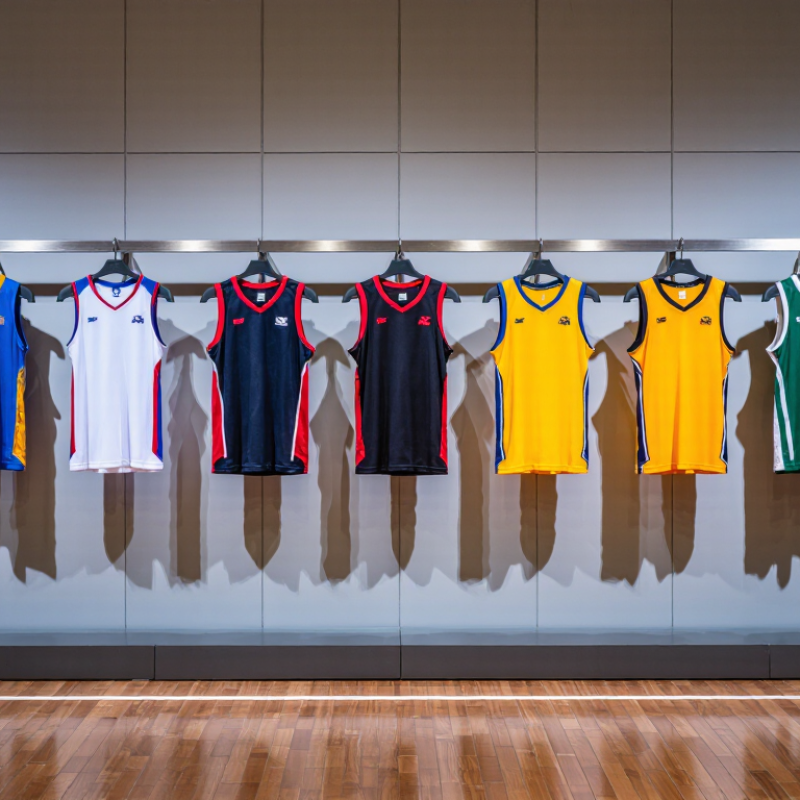
China Top 10 Basketball Jerseys Suppliers?
Basketball jersey suppliers in China include more than factories. The category covers OEM manufacturers, ODM developers, custom teamwear producers, blank apparel wholesalers, and printing specialists. Some factories cut fabric, sew panels, add names, and pack orders in one facility. Others outsource embroidery or sublimation work. This difference affects quality control, delivery time, and pricing.
China’s National Bureau of Statistics reported apparel production of over 20 billion pieces in 2023. China Customs data also recorded textile and apparel exports worth about 293.6 billion US dollars that year. These figures show manufacturing depth, but they do not prove that every supplier fits basketball projects. A reliable evaluation should check fabric weight, moisture management, size grading, colorfastness, sample accuracy, and production capacity. The category is not perfectly clean. A trading company may appear to be a factory, while a small workshop may offer better technical control.
Tips: Request a physical sample before comparing quotations. Test the fabric after washing. Ask for recent production photos, quality records, and clear defect policies. Verify whether printing, sewing, and packing happen under one management system. The Textile Exchange Materials Market Report also highlights growing attention to recycled fibers and supply-chain transparency. Buyers should request material certificates and batch information. A top-ten list can guide research, but it should not replace an on-site audit or independent inspection.
China’s top basketball jersey suppliers should be judged beyond attractive catalogs. Grand View Research valued the global sports apparel market at approximately USD 248.6 billion in 2023, with continued growth expected through 2030. That growth increases supplier competition. It also makes verification more important.
Request a pre-production sample, not only digital artwork. Check fabric weight, stretch recovery, stitching density, collar shape, and print alignment. Measure the sample after washing. Colorfastness should be tested against perspiration and repeated laundering. Small details matter. A reliable factory should provide material specifications, production photos, inspection records, and clear defect tolerances. ISO 9001-based quality procedures can support consistency, but certificates alone prove little.
Capacity is another practical filter. Compare minimum order quantities, sample timelines, monthly output, and peak-season planning. The supplier should explain how it controls subcontracting and traces fabric batches. Textile Exchange’s Materials Market Report 2024 shows polyester remains the dominant fiber in global production, so buyers should ask whether recycled content claims are independently verified. Environmental statements need evidence. Do not accept vague percentages.
Cost deserves careful reading. A low quotation may exclude pattern grading, packaging, testing, or replacement terms. Grand View Research also identifies online purchasing and customization as major sportswear growth factors, increasing pressure for flexible production. Yet flexibility can reduce consistency if factory records are weak.
The uncomfortable lesson is simple: one excellent sample does not guarantee every shipment will match it. Inspect production, not promises.
China’s top ten basketball jersey suppliers compete through different product strengths. The strongest fabric specialists offer lightweight polyester, breathable mesh, and sweat-control finishes. Sublimation experts create sharp gradients, sponsor panels, and durable all-over graphics. Cut-and-sew factories provide stitched names, layered trims, and heavier professional-style uniforms. According to Textile Exchange’s 2024 Materials Market Report, polyester represented about 57% of global fiber production in 2023. Material knowledge matters.
Other leading suppliers focus on low minimum orders, youth sizing, reversible jerseys, and fast sample development. Some factories support private-label programs with digital pattern making and size grading. Others perform better in bulk teamwear, where color consistency and packing accuracy are critical. The 2024 McKinsey-WFSGI Sporting Goods report identifies product innovation and supply-chain flexibility as important industry priorities. These strengths help buyers reduce redesigns and delivery risks.
Quality evidence should include fabric test results, wash samples, measurement charts, and pre-shipment inspection records. Experienced buyers should check colorfastness after repeated washing, not only the first sample. A supplier may quote cheaply, yet weak stitching can increase replacement costs. That is a practical warning. The ranking can also be imperfect because suppliers often excel in one category, not every category. Product strength, communication, order scale, and verified production capacity should be evaluated together.
A China top-10 basketball jersey supplier shortlist should compare customization depth, fabric evidence, pricing, and minimum order quantity. Request a physical sample before approving bulk production. A digital mock-up can hide loose stitching, uneven side panels, or poor color control.
Material choice changes comfort and cost. Textile Exchange’s Materials Market Report 2024 estimates polyester represented about 59% of global fiber production in 2023. Recycled polyester accounted for roughly 12% of polyester output. For active jerseys, 140–160 gsm fabric feels lighter, while 180–220 gsm fabric offers a denser, more structured fit. Ask suppliers for fabric composition, GSM, colorfastness, and moisture-management test results. “Breathable” alone proves very little.
Pricing needs a clear specification. Indicative factory quotations often range from 8 to 18 US dollars per jersey for standard sublimation orders. Heavy fabric, sewn appliqué, player names, and individual packaging can increase the unit price. Common minimum orders range from 50 to 100 pieces per design, but smaller trial orders may carry setup charges. Confirm whether sampling, artwork adjustment, packaging, and freight are included. One practical mistake is comparing prices before matching fabric weight and decoration methods. That comparison looks efficient, but it is usually misleading.
| Supplier Profile | Primary Product Focus | Common Jersey Materials | Customization Options | Indicative Price Range per Jersey (USD) |
Typical MOQ | Sample Lead Time | Bulk Lead Time | Best Suited For |
|---|---|---|---|---|---|---|---|---|
| Supplier Profile 01 | Standard team basketball uniforms | 100% polyester mesh; moisture-wicking knit | All-over sublimation, names, numbers, size grading, custom necklines | $8–$15 | 30–50 pieces | 5–8 days | 15–25 days | Schools, clubs, and amateur leagues |
| Supplier Profile 02 | Premium reversible jerseys | Double-layer polyester mesh; breathable performance fabric | Two-sided sublimation, reversible colorways, woven labels, custom trims | $14–$24 | 50–100 pieces | 7–10 days | 20–30 days | Competitive teams needing home-and-away uniforms |
| Supplier Profile 03 | Budget bulk basketball apparel | Lightweight polyester; basic interlock fabric | Basic sublimation, printed numbers, standard size chart | $5–$10 | 100–300 pieces | 5–7 days | 15–22 days | Large events, youth programs, and promotional orders |
| Supplier Profile 04 | Eco-conscious basketball uniforms | Recycled polyester; certified or traceable recycled yarn options | Sublimation, recycled hangtags, packaging customization, size personalization | $12–$22 | 50–100 pieces | 7–12 days | 25–35 days | Organizations with sustainability requirements |
| Supplier Profile 05 | Cut-and-sew performance jerseys | Polyester-spandex blend; stretch mesh panels | Custom patterns, panel construction, piping, embroidery, heat-transfer details | $18–$32 | 100–200 pieces | 10–14 days | 30–45 days | Professional-looking teamwear and detailed designs |
| Supplier Profile 06 | Small-batch custom jerseys | Polyester mesh; quick-dry sports fabric | Individual names and numbers, mixed sizes, low-volume design approval | $12–$20 | 10–30 pieces | 5–10 days | 15–25 days | Startups, local teams, and test orders |
| Supplier Profile 07 | Fashion and lifestyle basketball jerseys | Heavyweight polyester; cotton-touch jersey fabric | Oversized cuts, custom labels, embroidery, applique, special packaging | $20–$40 | 100–300 pieces | 10–15 days | 30–50 days | Streetwear, retail collections, and merchandise projects |
| Supplier Profile 08 | Team uniforms with integrated shorts | Moisture-wicking polyester; mesh side inserts | Matching shorts, sublimated sets, player personalization, custom waistband | $16–$28 per set | 50–100 sets | 7–12 days | 20–35 days | Complete youth, school, and club uniform programs |
| Supplier Profile 09 | High-volume private-label production | Polyester interlock, mesh, and recycled fabric options | Custom tech packs, labels, packaging, color standards, quality inspections | $7–$18 | 300–1,000 pieces | 10–15 days | 35–60 days | Retailers and distributors requiring scalable production |
| Supplier Profile 10 | Premium technical basketball apparel | Advanced polyester knit; perforated ventilation zones; stretch fabric | Performance patterning, laser-cut ventilation, silicone details, custom branding | $25–$45 | 100–300 pieces | 12–18 days | 35–55 days | High-performance teams and premium sportswear collections |
Pricing and production times are indicative China-market ranges for custom basketball jerseys and may vary according to fabric weight, artwork complexity, personalization, order quantity, inspection standards, packaging, shipping terms, and seasonal production capacity.
Selecting a Chinese basketball jersey supplier requires more than comparing prices. Grand View Research reported that the global sports apparel market reached about USD 248.9 billion in 2023. Demand is growing, but buyers still face inconsistent sizing, fabric quality, and delivery control. Request a complete sample, not only digital artwork. Check the collar, stitching, mesh weight, print edges, and washing results.
Ask suppliers for recent production photos, factory addresses, quality procedures, and export experience. ISO 9001 certification can indicate documented processes, but it does not guarantee a perfect jersey. Verify the certificate and inspect actual goods. The World Bank’s 2023 Logistics Performance Index ranked China 19th globally, showing strong logistics capability, though individual factories may perform very differently. Request a written production schedule with inspection points.
A reliable supplier should explain fabric composition clearly, such as polyester percentage, breathability, colorfastness, and shrinkage tolerance. Laboratory test reports are useful when they identify the tested material and date. Do not accept vague claims. A low quote still attracts me. That is the trap. Compare the full landed cost, including sampling, packaging, transport, revisions, and possible defects. Start with a small trial order and measure accuracy before scaling. Supplier selection is not always comfortable; even a polished factory visit may reveal little about daily production discipline. Review communication speed, correction behavior, and evidence, not promises.
Use these practical sourcing benchmarks when comparing Chinese basketball jersey suppliers. Confirm each figure directly with the supplier because minimum order quantities, production schedules, customization options, and shipping times vary by fabric, artwork, order volume, and destination.
The market includes factories, OEM manufacturers, ODM developers, wholesalers, and printing specialists. Some suppliers cut, sew, print, and pack in one facility. Others outsource decoration work. That difference can affect quality and delivery.
Request recent production photos, facility details, and sample records. Ask who controls sewing, printing, inspection, and packing. A trading company may present itself as a factory. This happens more often than buyers expect.
Check fabric weight, stretch recovery, stitching density, collar shape, and print alignment. Measure the jersey before and after washing. Test colorfastness against sweat and repeated laundering. Digital artwork is not enough.
Fabric around 140–160 gsm feels light and flexible. Fabric around 180–220 gsm feels denser and more structured. Ask for composition, GSM, moisture-management data, and colorfastness results. “Breathable” is too vague.
Common options include player names, numbers, sewn appliqué, sublimation, and individual packaging. Decoration methods influence appearance, durability, and cost. Request a pre-production sample with the exact artwork. Small details matter.
Standard sublimation jerseys may cost about 8–18 US dollars each. Heavy fabric and extra decoration can raise the price. Common minimum orders range from 50 to 100 pieces per design. Small trials may include setup charges.
Confirm whether sampling, artwork changes, packaging, testing, and freight are included. A low quotation may exclude important services. Compare identical fabric weights and decoration methods. Cheap is not always cheaper.
Ask for production photos, inspection records, defect tolerances, and fabric batch information. Check whether subcontracting is controlled and documented. Inspect production instead of trusting one excellent sample. One sample proves little.
Request material certificates and batch information for recycled fibers. Ask for independently verified recycled-content percentages. Vague environmental statements need stronger evidence. I would still verify them.
China’s basketball jersey supply industry includes factories and manufacturers that produce team uniforms, training wear, fan apparel, and custom Basketball Jerseys for schools, clubs, events, and retail programs. This overview explains how to evaluate suppliers by examining product quality, manufacturing capacity, fabric performance, printing and embroidery options, customization flexibility, communication, quality control, delivery reliability, and compliance with agreed specifications. It also compares ten supplier types according to their product strengths, such as advanced sublimation, durable stitching, breathable materials, rapid sampling, or large-volume production.
The article further discusses important purchasing factors, including material selection, color accuracy, logo placement, size ranges, pricing structures, sample charges, production schedules, and minimum order quantities. Finally, it provides a practical framework for choosing the right Chinese supplier based on project size, budget, design complexity, expected delivery time, and after-sales support. Careful comparison and clear specifications can help buyers establish dependable, efficient, and long-term supply relationships.
