GoldenLeaf Sports14+ Years Teamwear Manufacturer · Shenzhen, China
GoldenLeaf Sports14+ Years Teamwear Manufacturer · Shenzhen, China
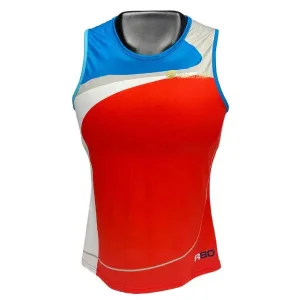
Explore our core customized teamwear and activewear product range manufactured in our 3,000 m² Shenzhen production center utilizing high-fastness dye-sublimation and ergonomic sport-specific pattern grading.
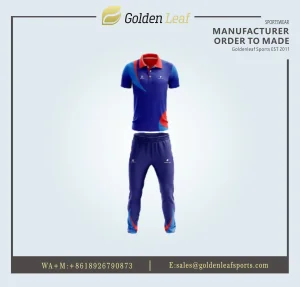
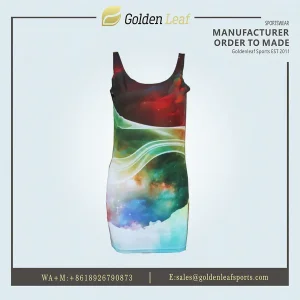
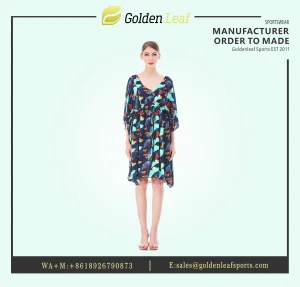
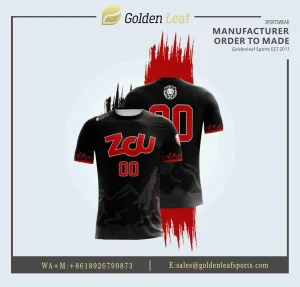
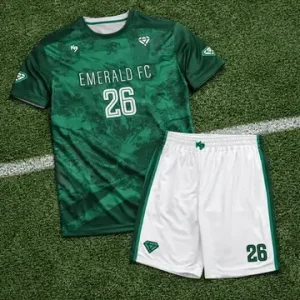
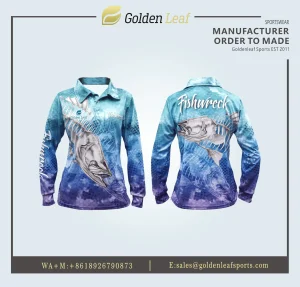
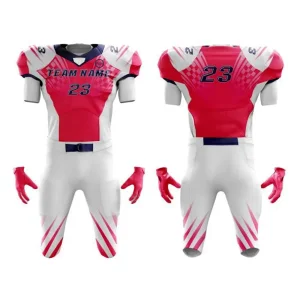
The history of football equipment manufacturing in China is a compelling narrative of industrial modernization, technology adoption, and supply chain integration. Over the past four decades, China has evolved from a basic low-cost labor market into the undisputed world hub for high-performance sportswear, technical gear, and sublimated athletic apparel. To understand modern football equipment sourcing, international procurement directors must analyze how Chinese factories reshaped global athletic production standards.
During the initial economic opening of Guangdong and Fujian provinces, early manufacturers concentrated on simple CMT (Cut, Make, Trim) contracts. Production was predominantly manual, relying on imported natural cottons and basic synthetic blends. Machinery was basic, focused on basic stitching for local and regional Asian markets.
Following China’s accession to the WTO, specialized industrial clusters emerged in Shenzhen, Dongguan, Jinjiang, and Qingdao. Factories invested heavily in advanced knitting machinery and synthetic yarn development. The shift toward 100% moisture-wicking polyester micro-mesh and bird-eye knits transformed football jersey manufacturing, allowing Chinese suppliers to capture massive international OEM shares for top European and North American sports brands.
Led by pioneering enterprises such as GoldenLeaf Sports (ShenZhen) Co., Ltd. (founded in 2011), the industry transitioned toward full-bleed digital dye-sublimation. By replacing traditional heavy screen printing and vinyl heat-transfers with eco-friendly imported sublimation inks, manufacturers achieved zero-hand-feel, fade-resistant, and infinitely customizable team kits with ultra-low minimum order quantities (MOQs).
Today, modern Chinese football equipment manufacturers combine AI pattern grading, automated registration-mark laser cutting, and eco-certified recycled PET yarns (rPET). Modern facilities integrate full-chain ODM services, maintaining end-to-end quality control under rigorous international standards such as OEKO-TEX Standard 100 and ISO 9001.
When global athletic brands, professional leagues, and school tournament organizers source sports uniforms, they evaluate technical precision, material durability, price efficiency, and delivery reliability. China’s football manufacturing landscape provides unprecedented systemic advantages across multiple key operational benchmarks.
Suppliers maintain extensive inventories of engineered fabrics: 145–180 gsm 100% polyester interlock, 4-way stretch poly-spandex blends (88/12), high-density bird-eye mesh, and heavy-duty rugby twills, providing optimized breathability and muscle compression.
Through digital dye-sublimation, individual player names, numbers, club crests, sponsor logos, and complex vector graphics are fused directly into fabric fibers, eliminating peeling, cracking, or extra weight.
While Western factories demand 500+ unit commitments per style, leading Chinese OEM/ODM hubs like GoldenLeaf provide agile minimum order runs starting at just 10 pieces, delivering virtual artwork within 24–48 hours and bulk shipments in 12–18 business days.
The global football equipment market is experiencing rapid technological evolution. Chinese manufacturers are driving this transformation by integrating state-of-the-art textile engineering with modern digital workflows.
Modern competitive match jerseys feature dynamic flatlock stitching and laser-cut ventilation zones placed precisely along high-sweat body maps. This structural design minimizes aerodynamic drag while eliminating skin chafing during intense matches.
Environmental compliance is a top priority for global brands. Leading Chinese facilities use water-free transfer technologies and non-toxic, OEKO-TEX certified Italian and Japanese inks that prevent water contamination while preserving vibrant color output.
Clubs and multi-sport academies increasingly request flexible garment blocks adaptable across football, rugby, lacrosse, and scrimmage training. Modern modular patterns accommodate distinct padding and movement requirements across different sports.
| Fabric Classification | Weight (GSM) | Composition | Key Performance Attribute | Optimal Application |
|---|---|---|---|---|
| Micro-Mesh Polyester | 145 - 160 GSM | 100% Breathable Poly | Maximum airflow, rapid moisture evaporation | Match Jerseys, Warm-weather play |
| Bird-Eye Knit Mesh | 150 - 170 GSM | 100% Cool-Max Poly | 3D honey-comb weave, anti-bacterial finish | Training scrimmage bibs, Academy kits |
| 4-Way Poly-Spandex | 180 - 220 GSM | 88% Poly / 12% Spandex | High stretch recovery, ergonomic compression | Volleyball shorts, Pro compression wear |
| Heavyweight Rugby Twill | 260 - 300 GSM | 100% Reinforced Poly | High tensile strength, tear & pull resistant | Rugby match wear, American football pants |
Securing reliable overseas production requires rigorous quality control and strict adherence to global compliance standards. Elite Chinese manufacturers maintain standardized 5-stage quality assurance systems to ensure every shipment meets exact dimensional, visual, and performance specifications.
Every roll of white base fabric undergoes GSM verification, stretch-recovery testing, and shade consistency inspection prior to printing. Sublimation inks undergo spectrometer color matching to ensure accurate Pantone replication.
Digital artwork is processed using specialized Raster Image Processor (RIP) software to achieve accurate ink distribution on heat-transfer papers, preserving gradient subtleties and sharp logo contours.
Automated optical registration cameras guide laser cutters across printed sublimated rolls. This step eliminates manual cutting tolerances and ensures exact alignment across complex side-panel graphics.
Apparel technicians use specialized four-needle six-thread flatlock machinery. Stress points—such as collar bands, sleeve cuffs, and short crotches—are reinforced with twin-needle stitching.
Dedicated QA inspectors measure garment dimensions against approved size charts, check seam integrity under tension, sort items by player name/number, and polybag each kit with custom brand labels.
Factories support versatile commercial trade terms including EXW, FOB Shenzhen/Yantian, CIF, and DDP (Delivered Duty Paid) via air express (DHL/FedEx/UPS), air freight, and ocean shipping.
Understanding regional market requirements is critical for global sports gear buyers. Chinese OEMs specialize in tailoring pattern cuts, fabric densities, and trim options to align with regional buyer expectations and environmental conditions.
Dominant Use-Cases: High School Athletic Associations, NCAA Club Sports, Youth Travel Leagues.
Localization Needs: Extended sizing blocks (up to 5XL), high-durability fabrics, loose-fit basketball/football cuts, and fast re-order cycles for roster changes.
Dominant Use-Cases: Professional Academy Leagues, Semi-Pro Football Clubs, Amateur Sunday Leagues.
Localization Needs: Athletic slim-fit European cuts, eco-certified recycled PET materials, subtle tone-on-tone sublimated textures, and strict REACH chemical compliance.
Dominant Use-Cases: Rugby Union/League, Netball Clubs, Touch Football, Aboriginal Heritage Matches.
Localization Needs: High UPF 50+ UV protection, heavy-weight tear-proof fabrics, custom reversible pinnies, and vibrant aboriginal art sublimation setups.
Founded in 2011 in Longgang District, Shenzhen, GoldenLeaf Sports (ShenZhen) Co., Ltd. stands as a premier example of modern Chinese athletic apparel manufacturing. Operating a 3,000 m² state-of-the-art facility backed by 160 skilled apparel technicians, GoldenLeaf seamlessly unites design, printing, cutting, sewing, and quality control under one roof.
With an annual output of over 300,000 custom garments and approximately USD 3 million in global export revenue, GoldenLeaf Sports serves sports clubs, school athletic departments, private-label apparel brands, and international distributors across the United States, Canada, Australia, the UK, Europe, Japan, and the UAE. Our 80% senior technician ratio ensures every stitch adheres to professional league performance standards.
Discover additional sublimated team apparel, custom jerseys, and athletic accessories engineered for high durability, breathability, and vibrant visual appeal.
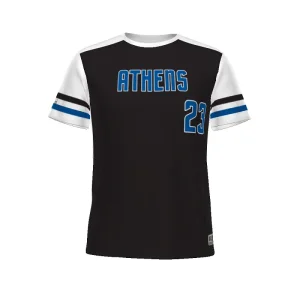
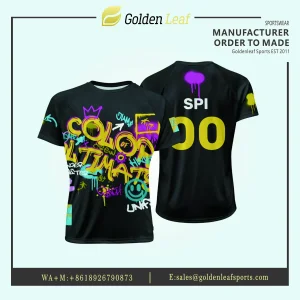
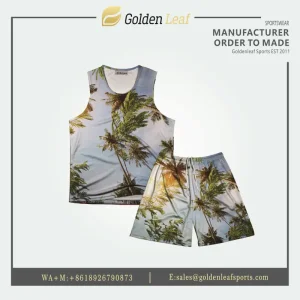
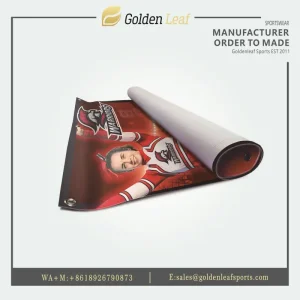
Clear, actionable answers addressing common commercial inquiries regarding MOQ, turnaround times, dye-sublimation durability, private labelling, and custom packaging.
Our standard minimum order quantity is just 10 pieces per design for custom sublimated jerseys, shorts, and pinnies. Because each panel is digitally printed prior to laser cutting, individual player names, numbers, and sizes can be customized across the 10-piece run at no extra charge. Separate minimums apply for knitted items like socks and caps.
Virtual digital mock-ups are completed within 24 to 48 hours. Pre-production physical samples take 5 to 7 working days. Bulk production runs of 300 to 1,000 pieces typically ship within 12 to 18 working days following signed sample approval, fully produced within our Shenzhen facility.
We recommend 100% polyester interlock (145–180 GSM), micro-mesh, or cool-max bird-eye mesh. For high-contact sports like rugby, we use heavy-duty rugby twill or 4-way stretch poly-spandex (88/12). All fabrics undergo color fastness testing (Grade 4+) using eco-friendly sublimation inks.
Yes. We offer complete OEM and ODM private-label solutions: custom woven neck labels, heat-transfer size logos, custom hang tags, barcode stickers, and custom-printed polybags tailored to your brand's specifications.
We ship worldwide to the USA, Canada, Australia, UK, Europe, UAE, and beyond. Supported Incoterms include EXW, FOB Shenzhen, CIF, and DDP via DHL, FedEx, UPS air express, air freight, or ocean logistics with detailed pre-shipment photo inspections.