



GoldenLeaf Sports14+ Years Teamwear Manufacturer · Shenzhen, China
GoldenLeaf Sports14+ Years Teamwear Manufacturer · Shenzhen, China
When industry analysts state that there are 2.5 billion cricket fans worldwide, the number is rarely treated as a production planning input. It should be. Every percentage point of that fan base that converts into a jersey, a training shirt, a club polo or a tournament kit becomes a specification sheet, a fabric order, a sublimation print run and a container booking. This whitepaper connects demand-side fan metrics to supply-side capability — specifically the OEM, ODM and private-label sportswear manufacturing capacity concentrated in China, and how a company such as GoldenLeaf Sports (ShenZhen) Co., Ltd. fits into that chain.
A fan count is not a purchase order. To make the number usable, manufacturers segment it by participation depth, geography and purchase behaviour. The illustrative model below shows how a global fan pool of 2.5 billion translates into a realistic served market for an OEM sportswear company.
Only the middle and lower bands of this funnel generate repeat production orders. That is precisely where sublimated, low-MOQ, high-variance teamwear outperforms mass-market cut-and-sew. A club of 22 players needs 22 different sizes and 22 different names — a workflow that rewards digital printing and penalises minimum-run economics.
A typical China-based OEM responds by maintaining multiple fabric standards, a pattern library graded across regional size charts, and per-garment rather than per-run printing. That capability is the real reason 2.5 billion fans matter to a manufacturer.
The cricket apparel value chain now behaves like three overlapping industries: a high-velocity replica retail market, a low-volume high-customisation club market, and a technical performance-wear market driven by playing conditions.
Replica shirt demand is concentrated around major tournaments and franchise leagues. High-volume programmes run on classic cut-and-sew with screen or heat-transfer branding, and are served by large factories in South Asia and China.
Grassroots clubs, schools and academies dominate unit volume but fragment it by size, name and number. This segment is the natural home of digital sublimation and 10-piece minimums.
Cricket is played in heat, humidity and long formats. Moisture management, UV properties and colour fastness become commercial specifications rather than marketing adjectives.
Independent brands launch cricket-specific lines without owning plant. They buy ODM service: pattern, mock-up, labelling, polybagging and carton marking all handled by the factory.
Federations and academy groups tender on measurable criteria: colour fastness grade, seam strength, measurement tolerance and QC documentation. Factories that publish these figures win.
South Asia anchors volume; the UK, Australia, New Zealand and the Gulf anchor premium spend; North America and continental Europe anchor growth in niche and lifestyle cricket apparel.
These are the shifts procurement teams and product developers should plan around across the next three seasons.
Full-garment digital sublimation has moved from premium option to baseline expectation, because it eliminates per-colour costs and permits unique artwork per player at no tooling penalty.
Buyers increasingly place 10–50 piece orders per design through online configurators. Factories that still quote 500-piece minimums are structurally excluded from grassroots cricket.
Youth grading, extended plus sizes and female-specific cricket blocks are now separate pattern families, not scaled versions of a men's medium.
Sponsor colours must repeat across seasons. Colour-managed RIP workflows and grade-4-plus fastness testing are becoming contractual requirements rather than selling points.
Recycled polyester options and eco-friendly inks are requested by schools and public-sector buyers who must report on procurement sustainability.
Neck labels, hang tags, polybag print and master-carton marking are bundled into the manufacturing quote, letting small brands launch a full SKU set from one supplier.
Buyers now ask for floor area, headcount, output figures, QA inspector counts and inspection photographs — the operating data that separates a factory from a trading agent.
Virtual mock-ups delivered in 24–48 hours compress the development cycle and reduce physical sampling costs for multi-team kit programmes.
Search behaviour has moved from keyword matching to intent matching. Manufacturers that publish genuine technical detail — fabric weights, MOQ logic, lead time — are surfaced for procurement queries.
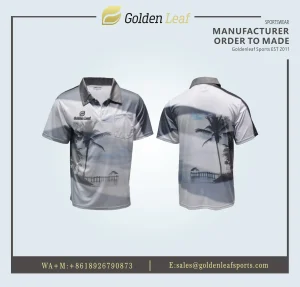
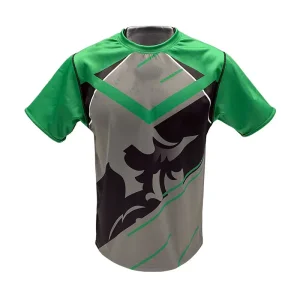
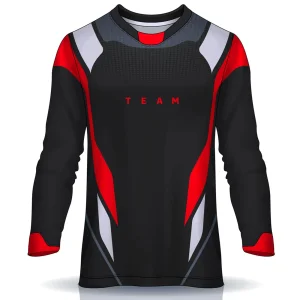
The following eight programmes represent the manufacturing blocks most frequently paired with cricket and multi-sport club orders — from custom fishing and outdoor apparel through to rugby, basketball and training tracksuits.
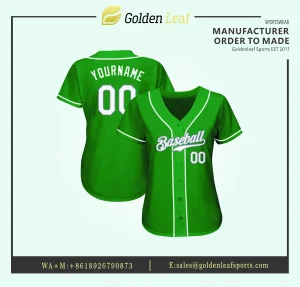
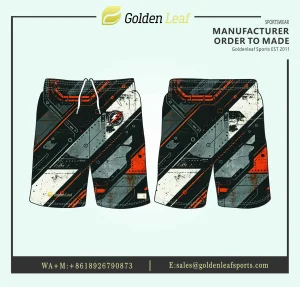
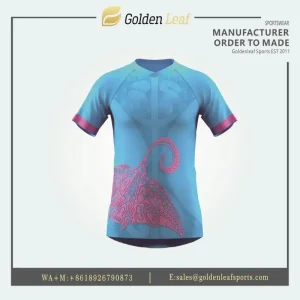
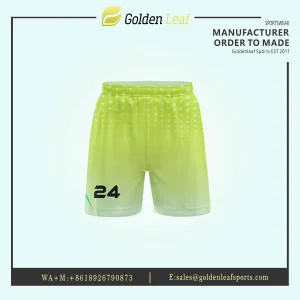
Regional purchasing behaviour differs sharply. A single specification cannot serve all five scenarios below, which is why multi-standard factories outperform single-line factories in cricket markets.
High-volume, low-ticket orders. Clubs order 15–40 pieces per team, require name and number per player, and are extremely price-sensitive. Sublimation plus 10-piece MOQ is the only economically viable route.
Public-sector procurement. Buyers require documented QC, measurement tolerance and colour fastness. Kit programmes are tendered annually, so repeatability across seasons matters more than unit price.
Heat and UV exposure dominate specification. Lightweight polyester mesh, white and light base colours, moisture-wicking treatments and UV-stable inks are requested as standard.
Franchise leagues and corporate cricket tournaments order mid-size runs with heavy branding. Sponsor logo placement, multi-colour panel layouts and branded polos dominate the brief.
Smaller volumes but higher design expectation. Buyers want DTC-grade mock-ups, private-label neck tags, premium polybags and fast digital sampling before committing to a 50-piece run.
Teamwear distributors buy across sports in one shipment. Being able to consolidate rugby, basketball, polo and training kit under one purchase order shortens their supply chain and reduces freight cost.
A modern sublimation factory runs four sequential technical layers. Each layer has its own failure modes — and each one is where an informed buyer should ask questions.
Vector artwork is prepared in the factory's design suite. Regional size charts are confirmed, the block pattern is graded, and a virtual mock-up is returned in 24–48 hours for approval.
RIP software profiles map Pantone values to printer output. Panels are printed onto transfer paper using imported Eco-friendly sublimation inks, with colour checked before press time.
Dye is bonded into the polyester fibre under controlled temperature and pressure. Registration-mark laser cutting then aligns stripes, logos and side panels across every size in the run.
Flatlock and overlock lines assemble the garment. Five QA/QC inspectors check measurement, colour and stitching before polybagging, name-sorting and carton marking for dispatch.
Multi-sport distributors and league operators do not buy garments; they buy supply certainty. Four macro-level solutions address that need.
Rugby, basketball, baseball, polo, training tracksuits and shorts can be specified under one purchase order at one facility. For a distributor serving schools and clubs across several sports, consolidation removes split shipments, duplicated freight and inconsistent QC standards between vendors. It also simplifies returns handling and lets the buyer negotiate a single payment and documentation flow.
Rather than forcing a single large commitment, a tiered programme allows a buyer to launch with ten pieces per design, validate sell-through, and scale to hundreds of pieces on the winning styles. Because sublimation prints each garment individually before cutting, the per-unit cost penalty for a small first order is far smaller than in screen-printed production — which makes the tiered approach financially rational rather than merely convenient.
Brands launching cricket or multi-sport lines can ship finished, retail-ready product without owning production. Woven or heat-transfer neck labels, hang tags, size stickers, printed polybags and master-carton marking are all produced to the buyer's specification inside the same facility, which compresses the launch timeline and removes the need for a separate labelling vendor.
Public-sector and institutional buyers need proof, not promises. A five-person QA/QC line checking measurement, colour and stitching — with photographic inspection reports issued before dispatch — converts quality from a verbal assurance into an auditable record. This is the single most requested documentation set from schools, academies and federation procurement teams.
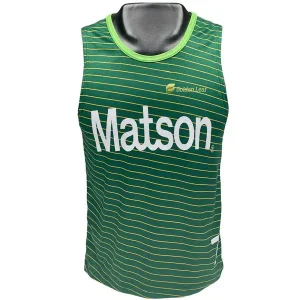
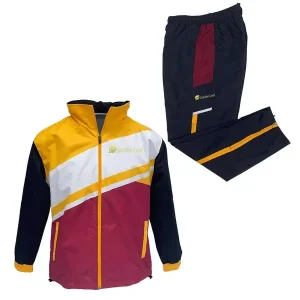
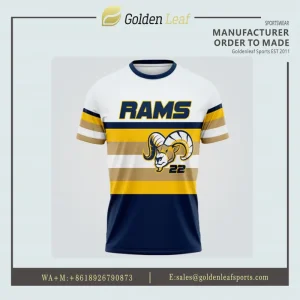
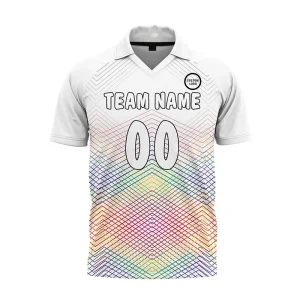
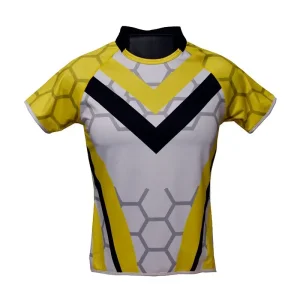
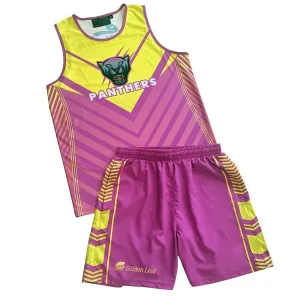
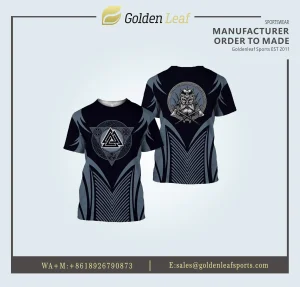
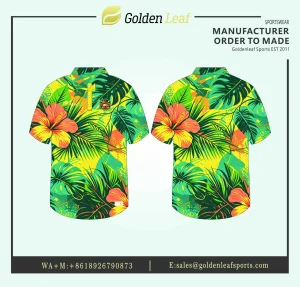
The second half of the range covers reversible basketball construction, full-sublimation training tracksuits, lightweight baseball jerseys, polyester polos, breathable rugby jerseys, team basketball uniforms, eco-friendly sports t-shirts and classic men's polos.
Expect further fragmentation of order sizes. Buyers will continue shifting from annual single-order programmes to quarterly micro-batches, forcing factories to optimise changeover time rather than throughput per SKU. Factories publishing MOQ, lead time and QC data will win first-contact procurement enquiries.
Colour management becomes a formal deliverable. Digital twin files, seasonal colour approvals and cross-season Pantone repeatability will be requested alongside the physical sample. Recycled polyester blends will move from optional to expected in school and public-sector tenders.
Design-to-order platforms integrate directly with factory RIP workflows, letting clubs configure kits online and route approved artwork straight into a print queue. Manufacturers that expose reliable technical data through structured, semantically clear web content will capture procurement intent earlier in the buying cycle.
This whitepaper is written from the perspective of a manufacturer that publishes its operating figures. Buyers should hold every supplier to the same standard.
GoldenLeaf Sports (ShenZhen) Co., Ltd. has manufactured teamwear continuously since 2011. Fourteen-plus years of continuous operation is the first authority signal a buyer should check.
Printing, heat pressing, laser cutting, sewing and QC operate under one roof in Longgang District, Shenzhen — no outsourcing of printing or quality inspection.
A 160-person team, 80% of whom are senior apparel technicians, produces roughly 300,000 pieces per year for export markets.
Five dedicated inspectors sign off each shipment against measurement, colour and stitching criteria, with photographic documentation before dispatch.
Direct answers to the questions that arrive most often from distributors, clubs and brand owners entering cricket-adjacent apparel.
It is a fan-base estimate, not an apparel market value. For manufacturing purposes the usable figure is much smaller: only clubs, schools, academies, distributors, brands and institutional buyers actually issue purchase orders. What matters is the shape of that demand — highly fragmented, size-varied, name-personalised and seasonal — which favours digital sublimation and low minimum order quantities over mass cut-and-sew production.
A standard MOQ is 10 pieces per design for sublimated jerseys, shorts and pinnies. Because each garment is printed individually before cutting, every player can receive a different name, number and size within the same ten-piece run at no extra charge. Knitted items such as socks and caps carry their own separate minimums.
Digital mock-ups are returned within 24–48 hours. A physical pre-production sample takes 5–7 working days. Bulk runs of 300–1,000 pieces normally ship 12–18 working days after signed approval, printed and sewn in the factory's own facility without outsourcing the printing or QC stages.
Common base cloths are 100% polyester interlock (145–180 gsm), micro-mesh, bird-eye mesh, 4-way stretch poly-spandex (88/12) and heavyweight rugby twill. All base cloths are white-dyed and tested for colour fastness at grade 4 or above. For hot-climate markets, lightweight micro-mesh and bird-eye constructions are typically specified because they move moisture and reduce heat retention.
Yes. Full ODM and private-label service is available: woven or heat-transfer neck labels, hang tags, size stickers, printed polybags and master-carton marking to the buyer's specification. Reversible constructions and custom artwork are also produced in-house, letting a new brand launch a complete retail-ready SKU set from one supplier.
Regular shipments go to the United States, Canada, Australia, New Zealand, the United Kingdom, Ireland, Germany, France, Japan, the UAE and South Africa under EXW, FOB Shenzhen/Yantian, CIF and DDP terms by express courier, air freight or sea freight, with photographic QC reports supplied before dispatch.
Floor area, headcount, annual output, QA inspector count and inspection practice are verifiable indicators of whether a supplier is a manufacturer or a trading agent. Buyers comparing quotes should request these figures explicitly, along with pre-shipment inspection photographs, because they determine whether a low price reflects efficiency or an unverified subcontracting chain.
Send the sport, quantity and design direction. The technical team returns fabric options, graded size charts and a free virtual mock-up within 24–48 hours.