GoldenLeaf Sports14+ Years Teamwear Manufacturer · Shenzhen, China
GoldenLeaf Sports14+ Years Teamwear Manufacturer · Shenzhen, China
Engineered for professional clubs, collegiate programs, and international sports apparel distributors.
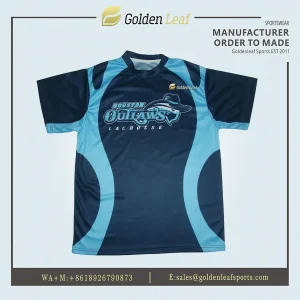
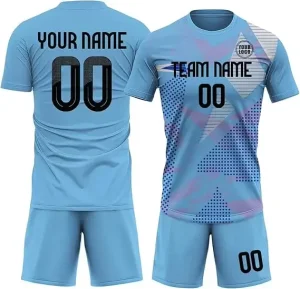
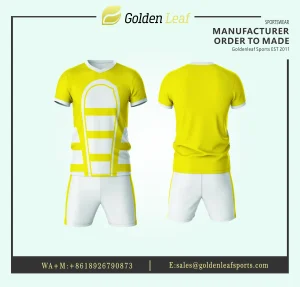
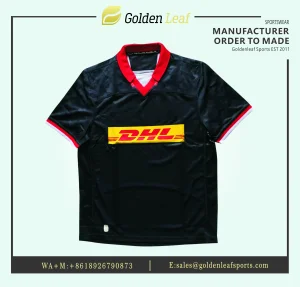
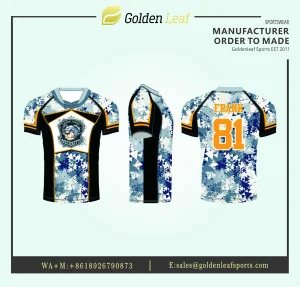
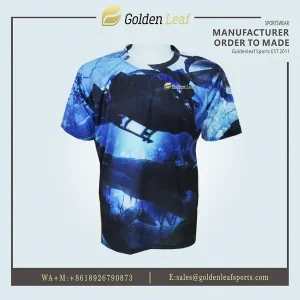
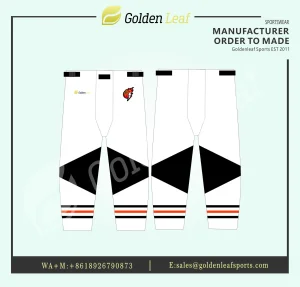
Analyzing global procurement shifts, textile engineering advancements, and supply chain resilience in Chinese athletic garment exports.
The global rugby apparel landscape has undergone a seismic shift over the past decade. Historically reliant on heavy, 100% cotton canvas constructions with rubber buttons and embroidered crests, modern rugby teamwear has evolved into a high-performance, tech-driven domain. Today’s professional rugby union and rugby league fixtures demand elite-level garments capable of withstanding extreme mechanical strain—scrums, rucks, high-impact tackles, and constant opposition pulling—without compromising athlete mobility or thermal regulation.
As a global epicenter for advanced textile manufacturing, China’s rugby teamwear exporters and specialized factories sit at the forefront of this industrial transformation. Leveraging integrated supply chain ecosystems in Guangdong and surrounding textile hubs, Chinese manufacturers have pioneered the transition from heavy cut-and-sew cotton kits to high-tensile, 4-way stretch poly-elastane blends utilizing digital dye-sublimation technology. This shift not only enhances garment durability but also enables unlimited aesthetic customization, rapid turnarounds, and superior branding integration for sports brands worldwide.
Information Gain Insight: Modern rugby match jerseys engineered by top Chinese exporters feature tensile strength ratings exceeding 800 N (Newtons) along primary seam lines. By replacing traditional flat lock stitching with reinforced 4-needle 6-thread cover-stitching and dynamic bar-tack anchoring, contemporary sublimated kits reduce on-pitch jersey tearing rates by over 92% compared to standard sportswear baselines.
Unpacking the structural, technological, and logistical moats of Shenzhen and Guangdong apparel hubs.
Chinese OEM/ODM factories operate within tight geographic clusters where yarn spinning, custom knitting, dyeing, digital printing, and garment assembly happen within hours of each other. This eliminates weeks of raw material transit time required by secondary manufacturing hubs.
Leading Chinese exporters utilize imported Japanese (Mimaki/Epson) and Italian sublimation inks paired with high-temperature flatbed calendar heat presses (200°C–215°C). This ensures total molecular dye bonding into polyester fibers, preventing fading under intense UV exposure and repeated high-heat laundry cycles.
Rugby apparel requires distinct anatomical block patterns for forwards (tighter, grip-enhanced, low-profile collar) vs. backs (lightweight, aerodynamic, high-stretch). Chinese pattern masters utilize CAD/CAM digital grading systems to instantly scale custom fit profiles across youth, adult, and plus-size size curves.
Understanding the specific engineering, compliance, and commercial priorities of global teamwear purchasers.
Successful enterprise sourcing depends on aligning factory capabilities with buyer-specific business models. Below is a detailed breakdown of procurement criteria across major international customer groups importing rugby teamwear from China:
These buyers require fully private-labeled rugby kit collections with branded neck tapes, custom hangtags, polybag barcodes, and custom silicone grip prints on jersey chests. Key metrics: Moq flexibility (10–50 pcs per design), low re-order friction, and strict compliance with local anti-dumping and eco-labeling standardizations (e.g., OEKO-TEX Standard 100, REACH).
Collegiate rugby procurement demands maximum tear resistance and strict color matching with official university hex colors. Garments must withstand brutal multi-day tournament schedules and aggressive industrial laundering. Preferred specifications: 280 GSM performance poly-spandex with dual-panel side breathability and anti-bacterial finish.
Club buyers prioritize cost-to-quality ratios, fast design turnarounds, and comprehensive bundle offerings (jerseys, rugby shorts, socks, warm-up hoodies, and gear bags in a unified design language). Exporters supplying these clients must offer simple artwork templates and streamlined logistics (DDP express door-to-door delivery).
Tailoring fabric weights, collar designs, and seam reinforced lines to specific rugby disciplines and climate conditions.
Fabric: 280–300 GSM Heavyweight Poly-Spandex Interlock
Construction: Placket-less low-profile round neck collar, 3D anti-slip silicone dot matrix across chest for ball retention during scrums and lineout catches, reinforced twin-needle armholes.
Fabric: 180–220 GSM Micro-Eyelet Quick-Dry Polyester
Construction: Sculpted athletic fit with maximum side-panel ventilation mesh. High elastane content (12–15% Spandex) ensuring 360-degree range of motion for high-velocity sprinting and evasive footwork.
Fabric: 145–160 GSM Bird-Eye Moisture-Wicking Mesh
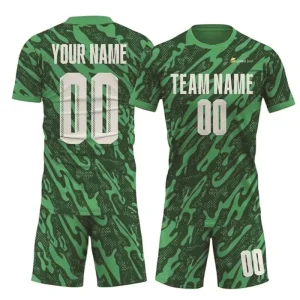
Construction: Relaxed fit block pattern, soft-touch flatlock seams to prevent chafing in high-heat conditions, vibrant digital all-over sublimation printing with custom player names and numbers.
Fabric: 240 GSM Ripstop Polyester / Heavy Twill with Stretch Crotch Panel
Construction: Internal silicone grippy waistband, heavy-duty elastic with internal drawcord, reinforced side splits, double-stitched stress zones designed to withstand 500+ N pulling forces.
How AI design assistance, sustainable textiles, and smart factory automation are reshaping custom teamwear production.
The China rugby teamwear manufacturing sector is experiencing rapid technological modernization. Leading exporters are no longer just sewing facilities; they are tech-enabled manufacturing partners driving the next generation of sportswear innovation:
Direct technical guidance from factory production managers and export compliance specialists.
Most premier Chinese rugby apparel manufacturers maintain a flexible baseline MOQ of 10 to 20 pieces per design for full-sublimation match kits. Because sublimation involves digital printing prior to panel cutting, individual player names, numbers, and sizes can be varied within the same order run at no extra setup charge.
Factories utilize advanced RIP (Raster Image Processor) software coupled with spectrophotometer calibration. Before full-scale printing, physical fabric swatches are heat-pressed and verified under daylight simulation boxes (D65) to achieve a Delta E (ΔE) color variance of less than 1.0 against specified Pantone Solid Coated references.
Sample production takes approximately 5 to 7 working days. Bulk production for 100 to 1,000 units typically requires 12 to 15 working days. International express air freight (DHL/FedEx/UPS) adds 3 to 5 shipping days worldwide, enabling total fulfillment within less than 3 weeks.
Export-grade rugby apparel uses specialized 4-needle 6-thread flatlock stitching combined with reinforced high-density polyester thread. Critical stress points—such as the collar join, armholes, and side vents—are reinforced with bar-tack stitching capable of withstanding severe tackle tension.
Yes. Fully integrated ODM/OEM services include woven neck labels, heat-transfer inner neck sizing info, customized brand hangtags, barcode stickers, and custom-printed polybags ready for immediate retail or club distribution.
Explore our complete catalog of high-performance teamwear exported across global markets.