GoldenLeaf Sports14+ Years Teamwear Manufacturer · Shenzhen, China
GoldenLeaf Sports14+ Years Teamwear Manufacturer · Shenzhen, China
Direct-from-factory sublimated teamwear engineered for durability, color vibrancy, and dynamic athletic movement.
Deconstructing supply chain dynamics, technical manufacturing compliance, and material science in China's specialized apparel ecosystem.
In the contemporary global athletic wear ecosystem, China sublimation 100% polyester short companies and factories occupy a critical node within the B2B supply chain. The transition from legacy screen printing and vinyl transfer to digital dye-sublimation has fundamentally altered the economics of teamwear, promotional apparel, and private-label sportswear manufacturing. Global buyers—ranging from established sports brands in North America and Western Europe to institutional distributors in Oceania—increasingly require high-precision, low-MOQ (Minimum Order Quantity), zero-fade apparel solutions capable of surviving rigorous laundering cycles and intense physical exertion.
Dye sublimation on 100% polyester fabric is not merely a surface decoration technique; it is a thermal molecular bonding process. When subjected to temperatures between 190°C and 215°C, disperse dyes transform directly from a solid into a gas phase, permeating the open molecular structure of the synthetic polyester fiber. Upon cooling, the polymer lattice snaps shut, trapping the pigment within the core of the yarn. This yields a permanent graphic integration that exhibits superior breathability, zero cracking, zero peeling, and zero added weight compared to heavy plastisol screen prints.
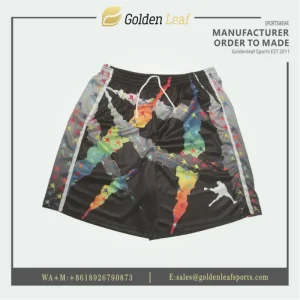
Digital sublimation allows individual player names, numbers, team rosters, and complex sponsor logos to be printed simultaneously across single cut-panels without incurring per-color screen charges or setup fees.
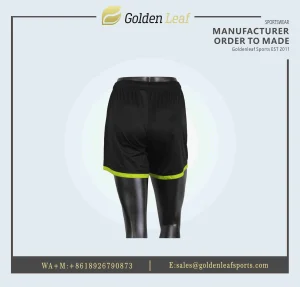
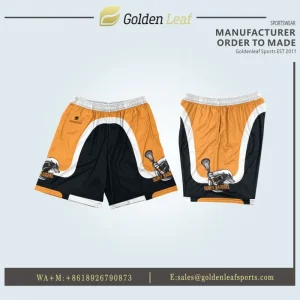
By using multi-filament 100% polyester interlock, micro-mesh, or bird-eye knits, China OEM factories engineer athletic shorts engineered for extreme bursting strength under heavy tackle conditions in lacrosse and rugby.
Polyester fibers absorb less than 0.4% of their weight in moisture. Combined with specialized moisture-wicking capillary surface treatments, sweat is immediately pulled to the outer shell for rapid evaporation.
A granular look at textile weight options, weave matrices, and dye sublimation performance metrics utilized by tier-1 OEM manufacturers.
The performance of a sublimated athletic short relies entirely on the quality of the base white polyester fabric (greige cloth). Premier Chinese manufacturing facilities maintain strict quality assurance over yarn count, GSM (grams per square meter) uniformity, and pre-heat shrinkage stabilization. Unstabilized polyester will warp under the 200°C sublimation heat press, causing misaligned patterns and distorted side seams.
| Fabric Type | Weight (GSM) | Weave Structure | Primary Application | Key Technical Benefit |
|---|---|---|---|---|
| Micro-Mesh Poly | 140 - 160 GSM | Open Pin-Hole Warp Knit | Ultimate Frisbee, Basketball, Running | Maximum ventilation, rapid airflow drying rate |
| Bird-Eye Mesh | 150 - 180 GSM | Textured Diamond Knit | Lacrosse Shorts, General Teamwear | High snag resistance, textured light reflection |
| Poly-Interlock | 160 - 200 GSM | Smooth Double-Knit Surface | Soccer Kits, Multi-Sport Training | High pattern resolution, smooth skin-contact feel |
| Heavyweight Twill Poly | 220 - 260 GSM | Woven Diagonal Rib | Rugby Match Shorts, Contact Gear | Extreme tear/bursting strength, structured fit |
| 4-Way Poly-Spandex | 160 - 190 GSM (88/12) | Elastomeric Circular Knit | MMA, Boardshorts, Pro Athletics | 360-degree mechanical stretch, zero motion restriction |
To ensure international market acceptance, high-tier Chinese factories operate under strict environmental and chemical standards. Base fabrics are certified under OEKO-TEX Standard 100 Class I (safe for direct skin contact), and sublimation inks are sourced from certified suppliers (such as Kiian, J-Teck, or Epson UltraChrome DS) to ensure compliance with REACH (EC 1907/2006) regulations for volatile organic compounds (VOCs) and heavy metals.
Inside the operational workflow of a modern 3,000+ m² Chinese sublimation garment production line.
Clients submit AI, EPS, or PDF vector files. Digital technicians scale the vector artwork across graded size templates (from Youth 6Y up to Adult 5XL) to prevent pattern distortion at extreme sizes.
Using spectrophotometers, factory technicians calibrate color output against solid Pantone (PMS) matching systems, compensating for polyester batch variances and ensuring brand consistency.
Industrial multi-head inkjet plotters print reversed designs onto high-release coated sublimation paper (typically 70-90 GSM) using water-based disperse pigment inks.
Printed paper and white polyester rolls (or cut panels) are fed simultaneously through a continuous oil-heated rotary drum calender at controlled temperature (205°C) and speed.
Automated camera-guided optical laser cutters detect registration marks on the sublimated fabric rolls, cutting individual panels (front, back, waistband, crotch gusset) with sealed, anti-fraying edges.
Garment technicians assemble panels using high-density flatlock (4-needle 6-thread ISO 607) or heavy-duty overlock machinery, integrating elastic waistbands, reinforced drawcords, and custom mesh side panels.
Quality assurance inspectors evaluate 100% of finished garments against spec sheets, checking seam tensile strength, color fastness, thread ends, and dimensional tolerances (±1cm limit).
Shorts are folded, individual polybagged with barcoded stickers, sorted by player number or size breakdown, and packed into heavy-duty corrugated export master cartons.
How global sportswear brands mitigate risk, optimize landed costs, and establish seamless OEM/ODM factory partnerships in China.
When selecting a China sublimation 100% polyester short company, commercial buyers must look beyond initial unit cost (FOB price) to evaluate Total Cost of Ownership (TCO). Operational failure points often occur in pattern grading errors, color shifting across re-orders, and delayed shipping windows that disrupt collegiate or professional league kickoffs.
1. Direct Factory vs. Trading Intermediary: Direct manufacturers possess vertical equipment setups (in-house printing, cutting, and sewing). This ensures immediate quality control, faster physical sampling (5-7 business days), and lower costs by eliminating middleman markups.
2. Dynamic Re-order Infrastructure: In teamwear sports (such as Ultimate Frisbee, Lacrosse, and Soccer), teams often require single-piece or low-quantity add-on orders mid-season for late-enrolled players. Top-tier Chinese suppliers maintain archived digital vector layouts and specific dye profiles, allowing identical mid-season additions without setup surcharges.
3. Advanced Trims & Construction Options: Premium sublimated shorts require custom component integrations. Leading factories offer deep technical options including anti-slip silicone waistband grippers, flat-braided reinforced drawstrings with custom metal aglets, hidden zippered media pockets, and breathable stretch-mesh gussets.
Definitive answers from factory engineers regarding minimums, technical compliance, lead times, and artwork specifications.
Standard factory MOQs typically start at 10 to 20 pieces per design. Because digital sublimation prints cut-panels from continuous fabric rolls rather than setting up individual physical screens, factories can comfortably process low-volume team rosters. Each individual garment inside that 10-piece run can feature unique player names, numbers, and sizing at no extra plate charge.
White "grin-through" occurs when light-colored base fabric shows through under extreme tension. High-quality factories mitigate this by using high-density double-knit fabrics (such as 180 GSM interlock), applying proper ink penetration heat settings (maximizing ink gaseous absorption), or using pre-dyed black/navy inner yarns for dark-colored garments requiring maximum stretch.
Yes. Leading Chinese suppliers source eco-friendly rPET (recycled Polyethylene Terephthalate) yarns made from post-consumer plastic bottles (certified under GRS - Global Recycled Standard). rPET possesses identical chemical properties to virgin polyester, allowing 100% dye sublimation vibrancy while helping brands fulfill sustainability mandates.
Factories require vector artwork created in Adobe Illustrator (.AI), Scalable Vector Graphics (.SVG), or Encapsulated PostScript (.EPS) format. All fonts must be outlined, and colors should be designated using the Pantone Matching System (PMS Solid Coated). High-resolution raster images (300 DPI minimum at 1:1 scale) can be integrated for photorealistic background textures.
Virtual 2D/3D digital artwork proofs are delivered within 24–48 hours. Physical pre-production samples require 5–7 working days for printing, laser cutting, and sewing. Mass production for orders between 100 and 1,000 pieces typically completes in 12–18 working days, followed by express air shipping (3–5 days) or sea freight (20–30 days depending on target port).
Flatlock stitching (ISO 607 4-needle 6-thread) creates an ultra-flat seam where raw fabric edges butt together without overlapping. This eliminates chafing against the player's skin during repetitive motion (running, jumping) and increases overall seam tensile strength, making it essential for high-performance lacrosse, rugby, and basketball shorts.
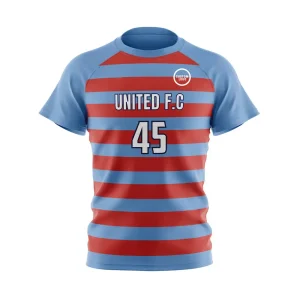
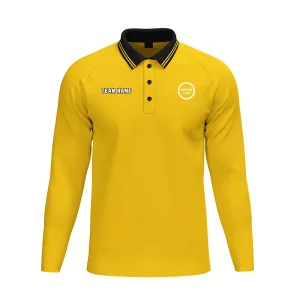
Complete team kit solutions—from sublimated jerseys and oversized polos to custom sport flags and accessories.