GoldenLeaf Sports14+ Years Teamwear Manufacturer · Shenzhen, China
GoldenLeaf Sports14+ Years Teamwear Manufacturer · Shenzhen, China
Explore our export-grade functional textiles engineered for extreme climate durability, active moisture management, and high-definition digital sublimation.
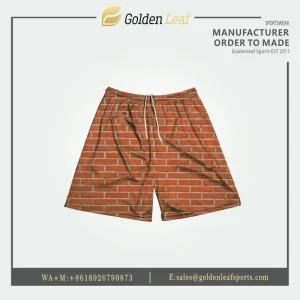
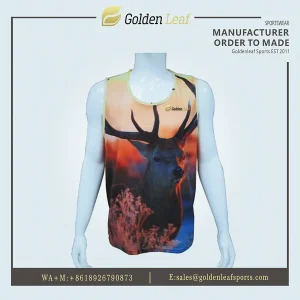
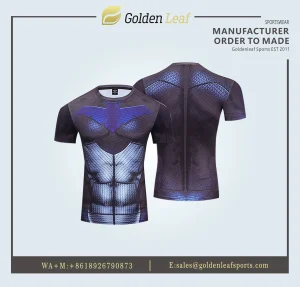
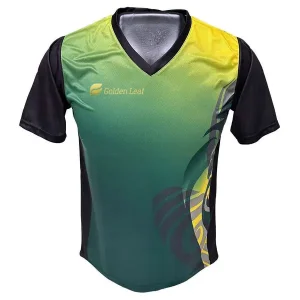
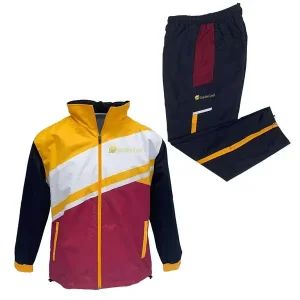
Analyzing enterprise procurement demand, global supply chain shifts, and polymer technology advancements driving the next generation of outdoor apparel.
Global apparel brands, fishing gear outfitters, and corporate distributors require high-yield, low-defect synthetic knits. Modern procurement prioritizes mill-level color consistency (Delta E < 0.8), anti-pilling resistance (Grade 4.5), and consistent batch-to-batch UPF ratings under extreme saltwater exposure.
With solar ultraviolet index (UVI) levels surging in marine environments, traditional lightweight cotton falls short. Direct exposure to saltwater and UV-A/UV-B radiation degrades untreated fibers. Synthetic polymers engineered with embedded inorganic photo-blockers provide permanent UPF 50+ protection.
Leading exporters in manufacturing hubs like Shenzhen leverage vertically integrated facilities. Combining digital dye-sublimation, registration-mark laser cutting, and multi-thread flatlock stitching allows rapid adaptation to high-volume commercial orders with minimal lead times.
Decoding the physical, chemical, and structural parameters that define world-class fishing shirt material manufacturing.
Low-grade fishing shirts rely on topical spray-on UV finishes that wash out after 10-15 laundry cycles. Enterprise-grade fishing shirt materials manufactured by specialized exporters utilize titanium dioxide (TiO2) and zinc oxide (ZnO) nanoparticles injected directly into the molten polymer matrix prior to fiber extrusion (spin-dyeing). This creates permanent UV reflection capability that persists for the garment's operational lifespan.
| Fabric Type | Composition Ratio | Structural Mesh / Knit Type | Air Permeability (CFM) | Primary Commercial Application |
|---|---|---|---|---|
| Micro-Interlock Poly | 100% Micro-Polyester (75D/72F) | Smooth High-Gauge Interlock | 120 - 150 CFM | Tournament Sun Shirts, Long-Sleeve Hoodies |
| Bird-Eye Micro Mesh | 92% Polyester / 8% Spandex | Pin-Hole Mesh Matrix | 220 - 280 CFM | Tropical Flats Fishing, Venting Underarm Panels |
| 4-Way Stretch Flex | 88% Polyester / 12% Elastane | Woven / Circular Knit Flex | 90 - 110 CFM | Offshore Performance Wear, Active Casting Shirts |
| Hydrophobic Ripstop | 100% Nylon 6,6 Micro-Twill | Cross-Hatch Ripstop Grid | 80 - 100 CFM | Button-Down Technical Guide Shirts |
Engineered synthetic fibers feature cross-sectional channels (such as trilobal or cruciform fiber profiles) that utilize capillary action. Liquid sweat is drawn off the epidermis, dispersed across a wide outer surface area, and evaporated instantly. This reduces skin temperature through evaporative cooling by up to 2-3°C in high-humidity offshore environments.
Marine environments accelerate bacterial growth and salt crystallization within fabric pores. Top tier exporters apply eco-friendly silver-ion (Ag+) or bio-based chitin treatments during the dyeing process. This prevents odor-causing bacteria proliferation and stops salt crystals from degrading elastomeric stretch fibers.
Meeting international environmental standards, PFAS-free chemical mandates, and global trade certifications for premium sports apparel.
Global brands are transitioning to post-consumer recycled polyethylene terephthalate (rPET) derived from ocean-bound plastics. Certified under the Global Recycled Standard (GRS 4.0), GRS-certified fishing shirt materials reduce carbon footprints by up to 45% without sacrificing tensile strength or soft hand-feel.
With strict US state regulations (e.g., California AB 1817) and EU REACH mandates outlawing per- and polyfluoroalkyl substances, modern fabric mills utilize fluorine-free (C0) Durable Water Repellent coatings. These hydrophobic surface treatments shed water splashes while remaining environmentally benign.
Export compliance requires rigorous verification. Premium factories ensure all raw grey goods, sublimation inks, and elastomeric threads comply with OEKO-TEX Standard 100 Class I (safe for prolonged skin contact) and Bluesign system requirements for clean chemical management.
Predicting next-generation smart textiles, phase-change thermoregulation, and high-efficiency manufacturing processes.
Timeline: Immediate Deployment
Integrating monolayer graphene nanostructures into micro-polyester filaments. Graphene offers unmatched thermal conductivity, distributing body heat rapidly across the fabric matrix while adding physical tear resistance against fishing hook snagging.
Timeline: 2026 - 2027
Integrating paraffin-based microencapsulated PCMs within the fiber core. These PCM particles absorb thermal energy when ambient temperatures rise above 32°C and release it as temperatures cool, maintaining an equilibrium skin microclimate.
Timeline: 2028 Horizon
Developing embedded smart yarns that dynamically alter optical opacity and color tone based on real-time solar intensity. The fabric automatically increases UV reflectivity during peak noon sun exposure while maximizing air permeability during overcast periods.
Inside our 3,000 m² Shenzhen production facility: Vertical integration, automated laser panel alignment, and strict 5-stage quality assurance.
At GoldenLeaf Sports (ShenZhen) Co., Ltd., we combine over 14 years of apparel manufacturing expertise with state-of-the-art Japanese digital sublimation printers. Printing artwork onto sublimation paper with imported eco-friendly inks ensures vivid color saturation that penetrates deep into polyester fibers, eliminating cracking, peeling, or loss of breathability.
Our automated registration-mark laser cutting machines slice printed panels with millimeter precision, guaranteeing perfect pattern matching across seams regardless of garment sizing—from Youth 6Y to Adult 5XL.
Direct factory supply for wholesale buyers, teamwear distributors, and custom performance brands globally.
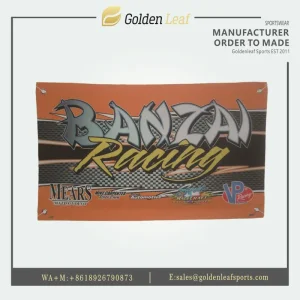
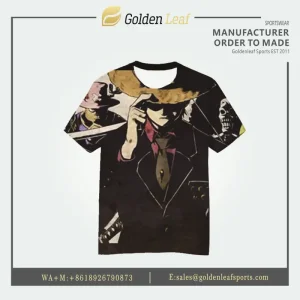
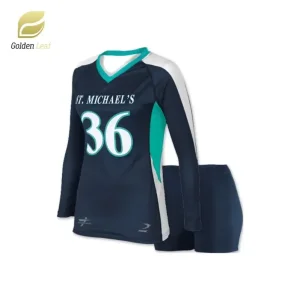
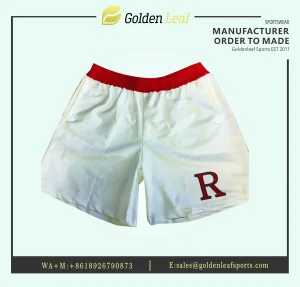
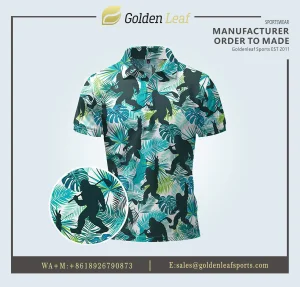
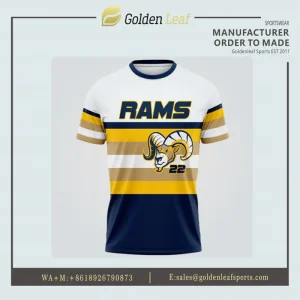
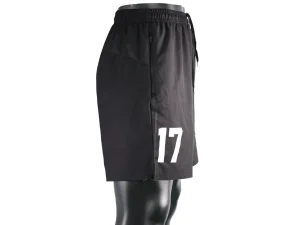
Expert answers addressing fabric selection, minimum order quantities, testing standards, and OEM/ODM private label customization.
Micro-polyester features synthetic hydrophobic polymer strands that absorb less than 0.4% of their weight in water, whereas cotton retains up to 8% water weight. Synthetic knits allow rapid moisture dispersion, dry 4x faster than natural fibers, resist saltwater degradation, and maintain structural integrity during intense casting movements.
UPF ratings are measured using Spectrophotometer testing under ASTM D6603 and AATCC 183 testing protocols. UPF 50+ indicates that the fabric blocks 98%+ of both UV-A and UV-B radiation. Our factory incorporates permanent inorganic TiO2 nanoparticles into the polymer melt prior to extrusion, ensuring the sun protection never washes out.
Our standard MOQ is 10 pieces per design for custom sublimated teamwear and fishing shirts. Virtual mockups are delivered in 24-48 hours. Physical samples take 5-7 working days. Bulk production runs of 300 to 1,000 garments typically ship within 12-18 working days from our Shenzhen facility.
Yes. Full OEM and ODM private-label options are available. We manufacture custom woven neck labels, heat-transfer inner neck sizing, hangtags, branded polybags, and customized master carton markings. We support regional size grading for US, European, Australian, and Asian fit specifications.
Unlike traditional screen printing or vinyl transfers—which lay a thick, air-impermeable rubberized film over the fabric—digital dye sublimation uses heat to convert disperse dyes into gas. This gas fuses directly into the polyester microfibers, leaving the physical pores of the knit completely open for unrestricted air movement.