GoldenLeaf Sports14+ Years Teamwear Manufacturer · Shenzhen, China
GoldenLeaf Sports14+ Years Teamwear Manufacturer · Shenzhen, China
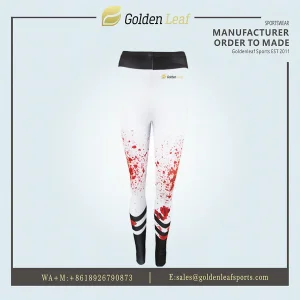
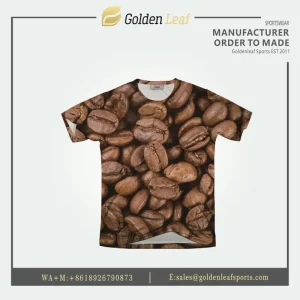
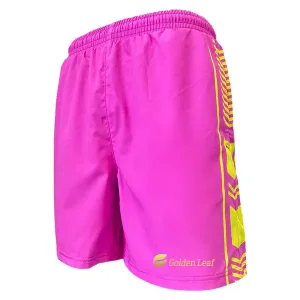
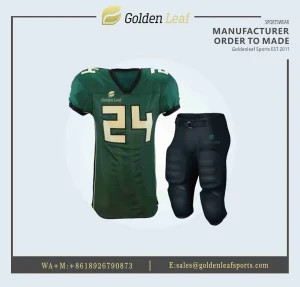
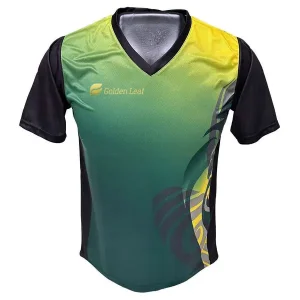
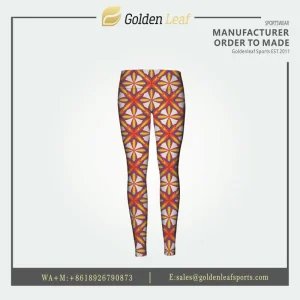
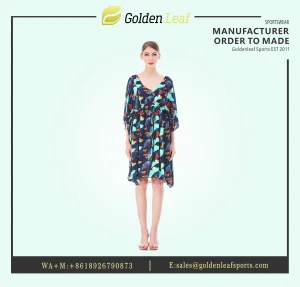
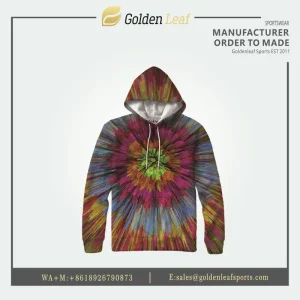
Explore our top-tier export-grade sublimated sportswear lineup manufactured under strict ISO9001 and AQL 2.5 quality assurance parameters:
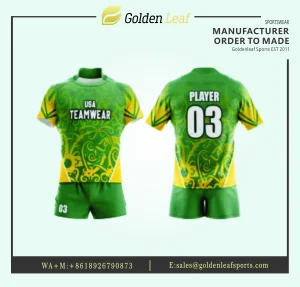
In modern full-contact athletics, the rugby jersey serves not merely as visual team identification, but as an advanced piece of protective, drag-reducing performance apparatus. Transitioning from heavy, water-retentive 100% cotton heritage collars of the 20th century to high-tensile, thermoregulating synthetic polymers, the global demand for high-quality rugby jerseys with sublimation printing has restructured the international sportswear manufacturing landscape.
As professional leagues (such as Super Rugby, Premiership Rugby, Top 14, and Major League Rugby) and elite collegiate programs demand zero-defect garments, global B2B procurement managers require transparent insight into textile engineering, dye-sublimation chemistry, and supply chain scalability. This technical analysis provides procurement directors, sports brand executives, and apparel importers with an exhaustive operational evaluation of Chinese manufacturing capabilities, material innovation metrics, and strategic sourcing protocols.
Unlike traditional screen printing or heat-transfer vinyl overlays, digital dye-sublimation printing is a thermochemical process that fundamentally alters the molecular structure of synthetic fibers. Under precise conditions—specifically temperatures ranging between 190°C and 215°C combined with pneumatic pressure of 4.5 to 6.0 bar—disperse dyes transition directly from a solid state to a gaseous state without entering a liquid phase.
The gaseous disperse dye penetrates the opened amorphous regions of heated polyester fibers. Upon cooling, the polymer matrix encapsulates the pigment, rendering the graphic integral to the yarn structure. This guarantees zero impact on air permeability or garment weight.
Traditional screen prints create thick rubberized films that increase surface friction during tackles and absorb sweat. Sublimated fabric maintains a completely smooth tactile surface, allowing players to slip through opponent grips effortlessly.
Utilizing high-end raster image processors (RIP) linked to Italian and Japanese ink-dispensing hardware, Chinese factories achieve Delta-E color variance ratings under 1.0, ensuring strict adherence to global brand guidelines.
| Fabric Type | Composition Ratio | Weight (GSM) | Tensile Strength (Warp/Weft) | Primary Application Field |
|---|---|---|---|---|
| Heavyweight Interlock Twill | 92% Polyester / 8% Spandex | 280 - 320 GSM | > 900 N / > 850 N | Professional Match Rugby Jerseys (Union/League) |
| High-Elastic Ripstop Mesh | 86% Polyester / 14% Elastane | 220 - 250 GSM | > 780 N / > 720 N | Rugby Sevens & High-Temperature Climates |
| Micro-Pique Moisture Tech | 100% Breathable Polyester | 180 - 200 GSM | > 650 N / > 600 N | Supporter Wear, Training Kits & Off-Field Apparel |
| Reinforced Shoulder Twill | 95% Poly / 5% Anti-Static Fiber | 300 GSM | > 950 N / > 900 N | Scrum & Contact Zone Reinforcement Panels |
China’s dominance in the global sportswear manufacturing market is driven by fully integrated supply-chain clusters located across the Pearl River Delta (Shenzhen, Dongguan, Guangzhou) and Zhejiang textile hubs (Shaoxing, Keqiao). For overseas procurement buyers, sourcing custom rugby kits directly from Chinese exporters unlocks operational efficiencies that regional hub competitors cannot match:
Direct proximity to world-class synthetic yarn extruders, functional chemical dye houses, and elastomeric knitters allows rapid prototyping and custom GSM development within 48 to 72 hours.
Advanced 3D CAD pattern software automates precision size scaling from 4XS Youth to 7XL Adult, maintaining identical proportional fit, armhole geometry, and panel alignment across all team rosters.
Automated optical registration cameras match sublimation print lines with physical blade trajectories down to 0.2mm tolerances, preventing pattern misalignment during flatlock stitching.
Flexible digital printing workflows allow Chinese manufacturers to accommodate low MOQ fill-in orders (10–20 units) alongside massive 50,000-unit seasonal retail rollouts with minimal setup overhead.
As performance sports equipment converges with digital fashion and environmental compliance standards, leading exporters are integrating pioneering manufacturing technologies to remain compliant with Western import mandates.
Transitioning from virgin crude-oil synthesized polyester to GRS-certified (Global Recycled Standard) post-consumer recycled plastic bottle yarn (rPET). These fabrics deliver matching tensile yield strengths while reducing carbon footprint by 45% per unit produced.
With elite sports science tracking movement metrics, modern professional rugby jerseys feature custom heat-welded internal neoprene pouches situated between the shoulder blades to hold STATSports or Catapult telemetry hardware without causing player friction impact.
Applying hydrophobic silicone micro-dots along upper chest and ribcage panels to minimize opposition tackling efficiency. The non-tack finish allows jerseys to slide out of hand grips during dynamic high-speed ball-carrying phases.
Rugby is not a monolithic sport. Procurement agents must tailor technical garment specifications to the precise code of play, taking climate, tackle mechanics, and pitch wear into consideration:
Key Requirement: Maximum Tensile Burst Strength.
Requires heavy 300+ GSM interlock knit with triple-needle reinforced seams and heavy-duty twill collars capable of enduring sustained scrum forces, ruck binding, and high-impact mauling without fabric tearing.
Key Requirement: Aerodynamic Ergonomics & Flexibility.
Prioritizes lightweight 240-270 GSM poly-spandex blends with extended raglan sleeve cut, tight athletic taper, and modified low-profile visual V-neck collars to prevent jersey pulling during wrestle-tackles on ground contact.
Key Requirement: Ultra-Light Thermal Dissipation.
Employs 180-220 GSM high-ventilation micro-perforated mesh with advanced hydrophilic moisture-wicking technology designed for maximum sprint velocity, rapid sweat evaporation, and multiversal multi-match day heat recovery.
Overseas apparel brands, educational institutions, and sportswear distributors require foolproof risk-mitigation strategies when establishing high-volume OEM/ODM manufacturing channels in China. Professional factories utilize standardized operational protocols:
Digital mock-up approval followed by physical paper-pattern sublimation striking. Factory ships a 100% finished sample within 5–7 days for color, sizing, and stitching verification.
Dye sublimation printing onto full fabric rolls utilizing continuous roll-to-roll heat calendar presses to maintain identical pressure, velocity, and temperature across thousands of panel meters.
Independent inline QA teams measure critical point dimensions, check seam tension, verify logo placement, and conduct 50-cycle washing machine color-fastness stress tests.
Consolidated air freight, express courier, or sea shipping complete with customs clearance, tax paid (DDP) handling directly to brand warehouses across Europe, North America, and Australasia.
Browse our complete export catalog engineered for high-durability competitive sports and multi-functional teamwear programs:
Expert responses to critical inquiries submitted by international sportswear brand owners, procurement heads, and club buyers:
Professional Chinese manufacturers utilize specialized 6-needle 4-thread flatlock structural seaming machinery combined with continuous high-tenacity core-spun polyester thread (30S/3 or 40S/2 tensile grade). Critical stress zones—such as armhole joints, neck collars, and shoulder seams—undergo double-stitch reinforcement or internal bar-tacking. This structure withstands pulling forces exceeding 850 Newtons under dynamic lab testing.
No. Because disperse dye sublimation transfers gaseous pigments directly into the interior of the polyester micro-fibers (rather than depositing a synthetic PVC or polyurethane plastic film onto the outer surface), the native microscopic gaps between the woven fibers remain 100% open. Hydrophilic capillary moisture-wicking treatments remain completely uncompromised.
Standard bulk manufacturing MOQs start at 10 to 50 units per vector design pattern, allowing fully customized individual player names, numbers, and sizing inside the single production run. Pre-production physical samples require approximately 5 to 7 working days, while bulk mass production typically completes within 12 to 18 business days depending on order volume.
Factories utilize calibrated X-Rite spectrophotometers alongside standardized Pantone Matching System (PMS Formula Guide Solid Coated) target libraries. Color strike-offs are printed directly onto the specified production fabric batch under standard D65 illuminant light boxes to eliminate metamerism prior to mass cutting.
Yes. Leading exporters provide certified GRS (Global Recycled Standard) recycled polyester knit fabrics derived from post-consumer PET water bottles. When paired with OEKO-TEX Standard 100 certified water-based sublimation inks, the entire finished garment meets strict European REACH and US CPSIA environmental chemical safety standards.