GoldenLeaf Sports14+ Years Teamwear Manufacturer · Shenzhen, China
GoldenLeaf Sports14+ Years Teamwear Manufacturer · Shenzhen, China
Explore our core digital dye-sublimated sportswear portfolio engineered for international brand distributors, school leagues, and high-velocity weekend sales procurements.
The global athletic apparel marketplace in 2026 operates under a fundamentally transformed supply chain dynamic. High-velocity retail cycles, driven by direct-to-consumer (D2C) e-commerce platforms, flash commercial events, and seasonal weekend clearance campaigns, require B2B buyers, brand owners, and league distributors to re-evaluate their sourcing paradigms. Sourcing high-quality sports apparel during weekend sales events is no longer merely an exercise in inventory liquidation; it has evolved into a strategic procurement window where agility, high-performance textile engineering, and OEM/ODM manufacturing responsiveness converge.
As international trade parameters stabilize and digital sublimation printing technologies mature, the industrial demand for customized, performance-driven sportswear has expanded beyond standard mass-production runs. Modern sports apparel buyers in North America, Western Europe, and Australia demand micro-batch flexibility (down to 10 pieces per design) without sacrificing structural fabric integrity or visual color fidelity. Shenzhen, China, has consolidated its position as the world's primary manufacturing node for digital dye-sublimated teamwear, serving as the production backbone for international OEM suppliers and exporters.
Core Supply Chain Metric for 2026: The integration of real-time digital pattern printing prior to panel cutting allows modern exporters to fulfill high-volume weekend sale spike orders with zero overproduction inventory risk, reducing standard turnaround timelines to 12–18 working days for order volumes ranging from 300 to 1,000 pieces.
Weekend sales surges require suppliers to maintain continuous raw fabric stocks—such as 100% polyester interlock (145–180 gsm) and 4-way stretch poly-spandex (88/12)—enabling instant conversion upon order placement.
Consumer demand in 2026 shifts heavily toward multi-functional athletic wear featuring graduated muscle compression, thermal regulation, and high-tensile flatlock seam construction.
Regulatory frameworks across Europe (REACH) and North America mandate non-toxic, water-based sublimation inks that achieve deep color penetration while eliminating chemical runoff.
Understanding the operational infrastructure of leading Chinese apparel exporters is essential for B2B procurement managers seeking high-reliability manufacturing partners. GoldenLeaf Sports (Shenzhen) Co., Ltd. operates a vertically integrated 3,000 m² production facility in Longgang District, Shenzhen. Founded in 2011, the enterprise encapsulates the modern industrial transformation required to power international sports apparel weekend sales campaigns.
Unlike traditional garment factories that rely on post-garment screen printing or heat-vinyl transfers—which suffer from peeling, cracking, and breathability restriction—GoldenLeaf utilizes digital dye-sublimation technology executed prior to cut-and-sew assembly. This technical sequence embeds imported eco-friendly dyes directly into the synthetic polyester microfibers under controlled temperature (200°C–220°C) and pressure parameters.
Equipped with computerized CAD systems, our technicians grade block patterns for US, EU, AU, and Asian size charts across youth (6Y–14Y) to extended adult sizes (up to 5XL), eliminating fit discrepancies across international markets.
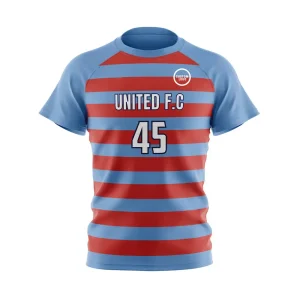
Optical registration mark sensors guide automated laser cutting units, ensuring sub-millimeter precision along printed seam margins, stripe match points, and raglan shoulder contours.
A specialized five-person QA/QC engineering line audits raw fabric density, color fastness (reaching Grade 4+ under ISO 105-C06 standards), seam tensile load, and dimensional tolerance before packaging.
The sports apparel sector is undergoing exponential disruption driven by advancements in material science, automated production engineering, and shifting consumer demographics. B2B exporters must align their technical offerings with four foundational industry trends:
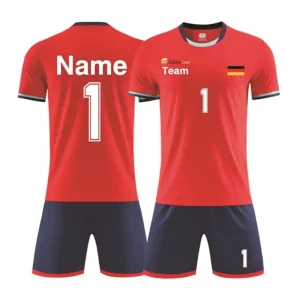
The traditional model of warehousing tens of thousands of pre-printed identical jerseys is obsolete. Modern sporting leagues, university teams, and regional clubs require personalized player names, custom numbers, sponsor badges, and regional flag emblems integrated directly into the fabric design. By establishing low minimum order quantities (MOQ 10 pcs per design), exporters enable brand owners to run lucrative weekend sales featuring personalized designs without holding toxic inventory.
Performance sportswear in 2026 leverages customized poly-blend matrices tailored to specific athletic disciplines:
Color fidelity across bulk re-orders historically posed significant challenges for international exporters. Leading manufacturers now implement AI-assisted Raster Image Processor (RIP) profiles linked with spectrophotometer calibration. This ensures that a weekend sale promotional jersey produced in September perfectly matches the color hue of a re-ordered team kit printed months later.
The deployment of high-quality sports apparel varies significantly across global geographic territories. Successful exporters tailor their OEM/ODM block patterns and material selections to local climate conditions, sporting cultures, and regulatory standards.
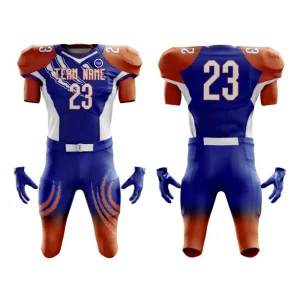
Dominant demand focuses on Lacrosse pinnies, American Football uniform sets with reinforced shoulder pad pockets, and varsity sublimation hoodies. Key requirements include strict adherence to NFHS/NCAA uniform sizing and flame-retardant fabric safety certificates.
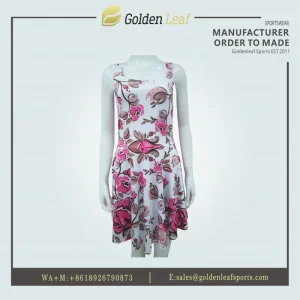
Requires ultra-durable 4-way stretch rugby shorts and technical netball dresses built with breathable side mesh inserts. Garments must withstand intense UV exposure, necessitating UPF 50+ sun-protection textile coatings.
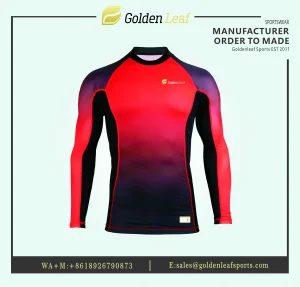
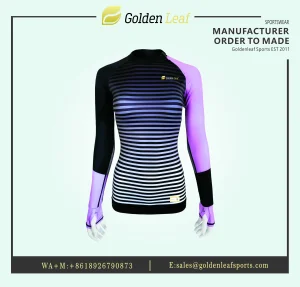
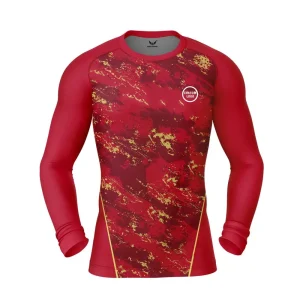
High demand for tailored slim-fit soccer kits, moisture-wicking long-sleeve compression baselayers, and windproof racing masks. Buyers prioritize OEKO-TEX Standard 100 chemical safety certifications.
To maintain a strategic advantage in global sports apparel supply, GoldenLeaf Sports executes a continuous technological upgrading path designed to optimize cost structures and manufacturing lead times.
Implementation of fully integrated vision-guided laser cutting arrays, eliminating manual optical alignment and boosting daily cut panel throughput by 45%.
Transitioning 80% of standard stock synthetic fabrics to 100% post-consumer recycled polyester yarn (rPET) derived from ocean plastics, fully certified under Global Recycled Standard (GRS).
R&D initiatives exploring conductive textile threads embedded into high-compression baselayers, allowing real-time athletic muscle fatigue and heart rate telemetry tracking.
Executing high-volume weekend sales campaigns exposes e-commerce brands and importers to severe logistics and operational bottlenecks if the manufacturing partner lacks structural elasticity. GoldenLeaf Sports provides a four-part macro enterprise solution:
We maintain over 50 metric tons of pre-tested white base cloths in various GSM weights, enabling immediate printing upon artwork lock.
Virtual 3D digital mock-ups are delivered within 24–48 hours; physical pre-production samples are completed in 5–7 working days.
Full Turnkey ODM branding including heat-transfer size labels, custom hangtags, barcoded polybags, and sorted master-carton packing.
Seamless export handling supporting EXW, FOB Yantian/Shenzhen, CIF, and door-to-door DDP air/sea freight channels.
Addressing core technical, financial, and logistics inquiries for international sports apparel importers, brand buyers, and procurement specialists.
Additional specialized sportswear lines engineered for high-durability performance, custom club branding, and international export distribution.