GoldenLeaf Sports14+ Years Teamwear Manufacturer · Shenzhen, China
GoldenLeaf Sports14+ Years Teamwear Manufacturer · Shenzhen, China
Explore our elite custom athletic wear lines manufactured with eco-friendly digital sublimation inks, zero graphic degradation, and high-tenacity moisture-wicking synthetic fibers.
Understanding the molecular transition of disperse dyes in high-tenacity polyester lattices under industrial heat and pressure conditions.
Traditional athleticwear decoration methodologies—such as screen printing, plastisol application, and vinyl heat transfer—rely on applying an opaque surface film over finished textiles. This layer restricts fabric breathability, increases thermal retention, and inevitably succumbs to mechanical degradation (cracking, peeling, and delamination) during repeated wash cycles.
In contrast, digital dye-sublimation manufacturing represents a chemical paradigm shift. Utilizing aqueous disperse ink formulations infused with microscopic colorant particles, artwork is printed in reverse onto high-density transfer paper. When subjected to temperatures between 195°C and 215°C under 4 to 6 bars of uniform pneumatic pressure, two physical phenomena occur simultaneously:
Upon cooling, the polyester lattices contract, encapsulating the pigment permanently inside the polymer fiber. The result is a total weightless print with zero change in textile hand-feel, retaining 100% of the base fabric’s moisture-wicking capillary network and stretch characteristics.
| Performance Attribute | Digital Dye-Sublimation | Traditional Screen Printing | Direct-to-Film (DTF) / Vinyl |
|---|---|---|---|
| Breathability & Air Permeability | 100% Retained (Zero Blockage) | Reduced (20%-50% Blocked) | Severely Impaired (100% Blocked) |
| Graphic Weight & Hand-Feel | Zero Added Weight (Soft Touch) | Heavy Rubberized Hand-Feel | Stiff & Rigid Plastic Feel |
| Durability & Longevity | Permanent (Will Not Crack/Peel) | Prone to Cracking & Fading | Peels After 15-30 Washes |
| Customization & Variable Data | Unlimited Names/Numbers/Logos | High Setup Cost Per Variable | Moderate Cost (Labor Intensive) |
| Color Range & Gradients | Photorealistic Continuous Tone | Limited Spot Colors | Moderate Gradient Accuracy |
An architectural analysis of Shenzhen & Guangdong's textile supply chain cluster, material technology innovation, and manufacturing scaling dynamics.
China's Pearl River Delta region—specifically the Shenzhen and Dongguan manufacturing hubs—represents the world's most densely concentrated sports textile cluster. Within a 50-kilometer radius, fabric mills, dye laboratories, specialized needlework workshops, digital printhead technicians, and international shipping logistics terminals operate in continuous synergy. This geographical concentration reduces material transport lead-times from weeks to under 48 hours.
Premier Chinese teamwear exporters leverage Japanese industrial printhead systems (such as Epson PrecisionCore microTFP) synchronized with Italian ergonomic dye formulations (e.g., J-Teck, Kian). Combined with specialized Raster Image Processor (RIP) software, factories execute precise raster-to-vector transformations, maintaining strict color reproduction with Delta E variance held tightly below 1.0 against standard Pantone Solid Coated guidelines.
Transitioning from manual shears to continuous-feed vision camera laser cutters ensures absolute panel accuracy. Optical registration sensors detect micro-alignment marks on printed transfer sheets, compensating for natural synthetic fabric elasticity. Panels are cut with sealed anti-fray edges prior to high-speed flatlock (4-needle 6-thread) seam assembly, ensuring ergonomic comfort for contact sports like rugby and lacrosse.
Operating from a modern 3,000 square meter standardized industrial facility in Longgang District, Shenzhen, GoldenLeaf Sports exemplifies the pinnacle of specialized teamwear engineering. Established in 2011, the company employs over 160 senior garment technicians and maintains an annual capacity exceeding 300,000 custom performance units.
By enforcing an end-to-end quality management protocol backed by 5 dedicated QA/QC line inspectors, GoldenLeaf achieves seamless execution across complex team apparel suites—spanning Lacrosse, Soccer, Basketball, Volleyball, American Football, and Rugby.
Exploring the convergence of recycled yarn polymers, waterless digital printing systems, and specialized athletic knit structures.
Global athletic apparel buyers are aggressively shifting procurement toward circular economy solutions. Modern recycled polyester (rPET) derived from post-consumer PET water bottles matches the tensile strength, dye-affinity, and thermal stability of virgin polyester. Advanced sublimation processes ensure that eco-friendly teamwear maintains high color vibrancy without compromising environmental governance (ESG) metrics.
Traditional liquid dip-dyeing consumes up to 100 liters of water per kilogram of processed fabric, yielding toxic wastewater runoff. Digital thermal transfer sublimation operates as a virtually waterless decoration process. Dye is applied directly via paper carrier sheets, drastically reducing chemical runoff and aligning with clean manufacturing initiatives recognized worldwide.
Sublimation base fabrics have evolved beyond basic interlock. High-performance lines feature tailored cross-section yarns such as Bird-Eye Mesh for maximum aeration, Micro-Interlock (145-180 GSM) for lightweight endurance, and 4-Way Stretch Poly-Spandex (88/12) for dynamic muscle compression. Specialized silver-ion coatings provide lasting antimicrobial odor barrier defense.
Streamlining turnkey OEM/ODM operations for sportswear brands, regional teamwear dealers, and sports federation buying groups.
For independent sportswear apparel labels, maintaining product identity is vital. Top-tier Chinese manufacturers provide complete OEM/ODM branding customization including customized heat-seal neck transfers, woven collar tags, custom branded polybags, custom barcode hangtags, and custom side-seam flag labels.
To mitigate international transit risks, production follows strict Acceptable Quality Limit (AQL 2.5) protocols. Every batch undergoes 5 stages of verification: Grey fabric inspection, digital print color matching check, post-sublimation heat shrinkage verification, sewing seam-stress analysis, and final packaging count verification.
Tailoring garment patterns, sizing matrices, and material specs to meet regional sporting codes and organizational standards globally.
Primary Sports: Lacrosse, Basketball, American Football, Track & Field.
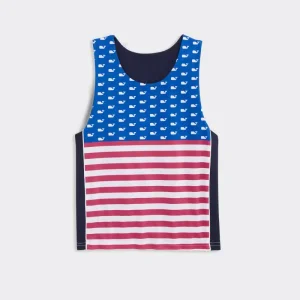
Technical Demands: Oversized shoulder patterns engineered to fit over protective body pads in Lacrosse and American Football. Strict adherence to NFHS jersey numbering regulations (contrasting solid numbers, clear background margins). Reversible dual-layer pinnies utilizing lightweight 120-140 GSM open mesh fabric for collegiate practice sessions.
Primary Sports: Soccer (Football), Rugby Union & League, Cycling.
Technical Demands: Athletic slim-fit sizing cuts. Rugby uniforms demand extreme seam resilience; utilizing 280-320 GSM heavyweight poly-elastane textiles reinforced with double-pass flatlock stitching and non-grab low-profile rubberized or round collar designs to withstand aggressive tackling friction.
Primary Sports: Netball, Australian Rules Football (AFL), Cricket.
Technical Demands: Netball dresses require high-wicking 220 GSM 4-way stretch fabrics with velcro bib attachments. Sublimation printing in Oceania frequently incorporates intricate Aboriginal and Pasifika cultural vector artwork requiring high-definition print resolution without color bleeding.
Discover additional factory-direct custom sublimated apparel solutions tailored for multi-sport organizations, athletic distributors, and private labels.
Technical, operational, and financial answers tailored for commercial buyers, equipment directors, and OEM brand owners.
GoldenLeaf Sports maintains a highly flexible MOQ of just 10 pieces per design for sublimated team apparel (jerseys, shorts, pinnies). Because every garment is printed digitally prior to cutting, individual player names, numbers, and custom sizes can be varied across the 10-piece run at no extra charge. Specialized knitted accessories like socks or headwear maintain separate factory minimums.
Digital vector mockups are rendered within 24 to 48 hours upon artwork submission. Physical pre-production samples require 5 to 7 working days. Standard bulk production orders (ranging from 300 to 1,000 units) ship within 12 to 18 working days following signed approval, manufactured completely in-house at our Shenzhen campus.
We utilize dedicated RIP color calibration profiles linked to standard Pantone Solid Coated swatch systems. Physical fabric color test strike-offs are printed and checked under standardized D65 daylight lamp booths. We ensure Delta E variances remain below 1.0 for precise color consistency across repeat orders over multiple seasons.
Yes. All sublimation inks imported and utilized in our factory carry OEKO-TEX Standard 100 certification. They are completely free of heavy metals, azo dyes, and volatile organic compounds (VOCs), making them 100% skin-safe for youth, collegiate, and professional wearers.
We routinely support EXW, FOB Shenzhen/Yantian, CIF, and DDP (Delivered Duty Paid) door-to-door delivery via DHL, FedEx, UPS express couriers, air freight, and ocean freight. Complete customs clearance paperwork, commercial invoices, and packing lists are handled seamlessly by our export division.
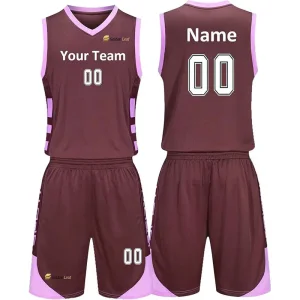
Yes. We specialize in single-layer dual-sublimated reversible pinnies and double-layer constructed reversible basketball uniforms using ultra-lightweight 120-140 GSM mesh textiles that eliminate bleed-through while keeping overall garment weight minimal.