GoldenLeaf Sports14+ Years Teamwear Manufacturer · Shenzhen, China
GoldenLeaf Sports14+ Years Teamwear Manufacturer · Shenzhen, China
Direct factory production lines for professional athletic clubs, fitness brands, and international distributors.
An authoritative evaluation of international trade dynamics, smart manufacturing hubs, and market growth drivers.
As the global sports apparel market moves through 2026, original equipment manufacturers (OEM) and original design manufacturers (ODM) are undergoing a structural shift. Driven by post-pandemic supply chain restructuring, direct-to-consumer (DTC) athletic brands, and strict EU ESG (Environmental, Social, and Governance) mandates, OEM manufacturing has transformed from labor-intensive manual assembly to high-precision, digital-first textile engineering.
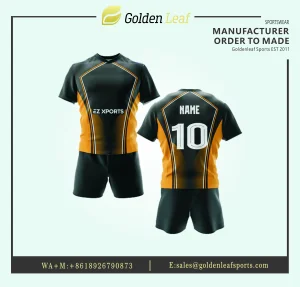
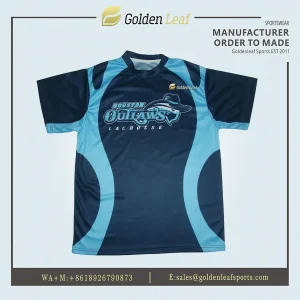
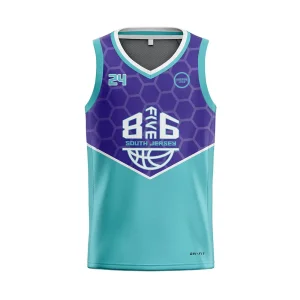
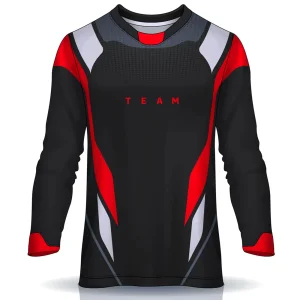
Shenzhen, China, has solidified its position as the premier advanced sportswear innovation cluster. Facilities equipped with high-speed digital sublimation printers, automated registration laser cutters, and real-time ERP color management systems are outpacing traditional bulk-sewing factories across South Asia. The market demand for specialized sports apparel—spanning sublimated lacrosse kits, multi-directional stretch compression wear, technical basketball jerseys, and rugged rugby teamwear—demands extreme flexibility, lower minimum order quantities (MOQs), and flawless turnarounds.
Discover how digital sublimation, bio-polyesters, and smart sensor integration are altering global production paradigms.
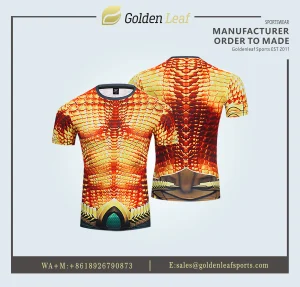
By migrating from wet-dyeing to thermal digital transfer (using imported non-toxic Eco-friendly inks), OEM factories eliminate wastewater output while achieving deep ink penetration into 100% polyester matrix fibers that resist fading, peeling, and cracking over 100+ high-temp wash cycles.
Advanced Raster Image Processor (RIP) engines combined with automated CAD software dynamically adjust complex sublimation graphics across varying body sizes—from 6Y Youth to 5XL Extended Adult blocks—preventing visual distortion of team branding.
2026 sports apparel standards mandate high percentages of post-consumer plastic bottle yarns (rPET). Micro-mesh, bird-eye mesh, and 4-way stretch poly-spandex blends are now engineered to maintain original tensile strength without compromising moisture-wicking capillary action.
How global athletic organizations leverage OEM/ODM customization frameworks across diverse operational environments.
The operational demands placed on sportswear vary significantly by regional geography, climate profile, and competitive league regulations. Modern OEM production lines must adapt textile compositions and seam construction to match local market needs:
High-frequency re-orders and micro-customization dominate US and Canadian scholastic sports. High schools and regional lacrosse clubs require individual player roster integration (unique names, numbers, sleeve graphics) inside small order runs (10–50 pieces). OEM manufacturers fulfill this through digital sublimation cut-and-sew workflows, eliminating expensive screen setups.
European sporting clubs demand stringent chemical safety certifications (OEKO-TEX Standard 100, REACH compliance). OEM exporters must supply fully verified white-dyed base polyester fabrics, water-based sublimation inks, and plastic-free bio-degradable polybag packaging to pass European customs inspection without penalty.
Australian and New Zealand rugby clubs place extreme mechanical stress on match kit seams. OEM production incorporates heavyweight 220–280 gsm twill fabrics, reinforced twin-needle cover-stitching, flatlock seam assembly, and stretch-collar inserts designed to withstand intense tackling without tearing.
A four-stage technological trajectory charting the evolution of smart textiles, automated cutting, and digital trace-back systems.
Elimination of physical prototype sampling via 3D CAD rendering engines, reducing sample approval time from 14 days down to 48 hours for global buyers.
AI camera-guided laser cutting beds automatically adjust for minor fabric stretch variations during heat-transfer paper sublimation, guaranteeing 0.5mm border accuracy.
Mass adoption of conductive threads woven directly into compression base-layers for real-time biometric tracking (heart rate, muscle exertion) without external pods.
Every garment ships with a woven heat-seal NFC tag detailing full supply chain origin, material percentage, carbon footprint, and automated end-of-life recycling instructions.
Seamless end-to-end manufacturing architectures designed to derisk procurement and maximize profitability.
OEM partners provide total branding integration. Beyond fabric sublimation, services include woven high-density neck labels, heat-transfer inner tagless sizing, custom-printed hangtags with barcode scanning, individualized polybags, and master carton sorting categorized by player roster or retail store destination.
To meet international standard ISO 9001, rigorous quality checkpoints are enforced at 5 distinct phases: (1) Raw white fabric incoming inspection, (2) RIP transfer paper color calibration, (3) Post-sublimation ink saturation check, (4) In-line stitching tension alignment, and (5) Final garment dimensional measurement check against graded size specifications.
Expert answers regarding minimum orders, lead times, sublimation technicalities, and private-label operations.
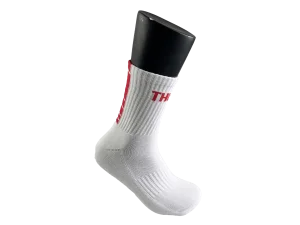
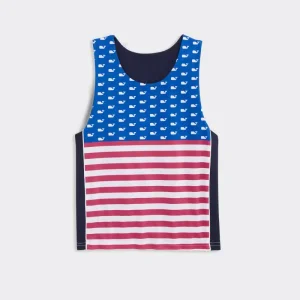
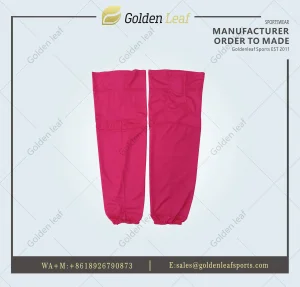
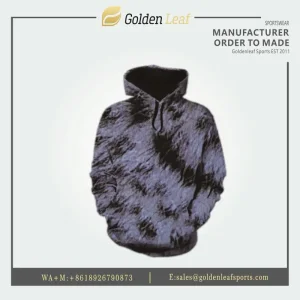
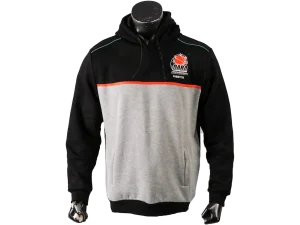
Explore our full OEM line of specialized socks, pinnies, hoodies, and customized team gear.