GoldenLeaf Sports14+ Years Teamwear Manufacturer · Shenzhen, China
GoldenLeaf Sports14+ Years Teamwear Manufacturer · Shenzhen, China
Explore our export-grade custom manufacturing capabilities, engineered for professional sports teams, global brands, and commercial distributors.
Analyzing structural shifts, material evolutions, and international procurement benchmarks in modern athletic carrying gear.
The international trade landscape for sports gear and technical carrying solutions is experiencing a radical transformation. Traditional mass manufacturing is being replaced by hyper-specialized Original Equipment Manufacturing (OEM) and Original Design Manufacturing (ODM) models. Global brand owners, teamwear distributors, and enterprise retail chains no longer evaluate OEM Sports Bag Exporters solely on unit price.
Instead, modern procurement directors mandate rigorous supply chain transparency, rapid digital prototype turnarounds, strict chemical compliance, and material traceability. As athletic disciplines diversify—spanning high-intensity functional fitness, outdoor endurance sports, tactical teamwear, and professional club logistics—the demand for custom bag architectures tailored to specialized gear has skyrocketed.
Environmental governance policies in key export destinations—specifically the European Union (under REACH and Circular Economy Directives) and North America (US Consumer Product Safety Improvement Act)—have elevated sustainable textiles from optional features to mandatory manufacturing standards.
Leading exporters now integrate Global Recycled Standard (GRS) certified polyester, post-consumer recycled nylon (rPET), and PFAS-free water-repellent coatings into their standard production lines. This transition protects brand partners from changing regulatory barriers while delivering high-performance, weather-resistant equipment luggage to end-users.
A deep breakdown of textiles, seam sealing, load-bearing ergonomics, and stress-point reinforcement.
Selecting the optimal substrate dictates the tensile strength, tear resistance, weight, and lifespan of an athletic bag. Professional OEM sports bag exporters employ specialized high-density weaves treated with polyurethane (PU) or thermoplastic polyurethane (TPU) backings.
| Fabric Classification | Standard Density / Weight | Tensile Strength (ISO 13934) | Primary Application | Technical Features |
|---|---|---|---|---|
| Cordura® Nylon | 500D - 1000D Nylon 6,6 | > 1800 N | Tactical & Expedition Holdalls | Extreme abrasion resistance, tear-proof, heavy load capacity |
| High-Tenacity Polyester | 600D - 1680D Ballistic Poly | > 1200 N | Teamwear & Club Duffels | Cost-effective, highly receptive to sublimation printing, structured weave |
| TPU Laminated Tarpaulin | 500 gsm - 840 gsm PVC/TPU | > 1500 N | Waterproof Outdoor & Marine Bags | 100% Hermetic seal capable, chemical resistant, easy wipe-down clean |
| Ripstop Micro-Poly | 210T - 420D Grid Ripstop | > 600 N | Ultra-light Marathon Pack / Drawstring | Featherweight, integrated cross-hatch reinforcement prevents tearing |
Ergonomic engineering reduces shoulder shear stress during heavy kit transport. Advanced OEM specifications incorporate 3D contoured EVA foam shoulder straps, high-density polyethylene (HDPE) frame sheets, and breathable air-mesh back panels designed with ventilated airflow channels.
Achieving true hydrostatic resistance (Hydrostatic Head rating > 10,000 mm) requires more than waterproof fabric. Exporters utilize High-Frequency (HF) Ultrasonic Welding for seamless TPU joins, paired with reverse-coil YKK AquaGuard® zippers and hot-melt seam taping across all main compartments.
Failure modes in equipment bags consistently occur at strap anchors and handle connections. OEM protocols eliminate weak points by enforcing cross-stitch Bartack algorithms (28-32 stitches per anchor), heavy-duty bonded nylon thread (Nylon 69), and internal webbed load straps.
Custom design configurations tailored to precise operational environments and sporting disciplines.
Professional rugby, soccer, lacrosse, and basketball squads require mass kit transport with dedicated organizational compartments. OEM solutions feature:
For expedition leaders, triathlon competitors, and water-sports enthusiasts, standard luggage fails under environmental stress. Specialized OEM bags incorporate:
Ensuring frictionless international trade through rigorous testing, social compliance, and localized logistics support.
Professional OEM exporters maintain certification compliance across major markets. Fabrics and trims undergo batch testing for OEKO-TEX® Standard 100, REACH SVHC (Substances of Very High Concern) exclusion, and California Proposition 65 lead/phthalate limits.
Global brand risk is mitigated through verified social compliance audits. Manufacturing facilities adhere to Business Social Compliance Initiative (BSCI), WRAP (Worldwide Responsible Accredited Production), and ISO 9001 quality management frameworks.
Seamless international distribution is supported by flexible shipping agreements (EXW, FOB Shenzhen/Yantian, CIF, and DDP). Exporters coordinate customs clearing, tariff classifications (HS Code 4202), and door-to-door freight directly to regional distribution centers in North America, Europe, Australia, and Asia.
Pioneering smart connectivity, self-sanitizing fabrics, and zero-carbon manufacturing processes.
Future sports bag manufacturing incorporates embedded Bluetooth Low Energy (BLE) beacon pockets, Apple Find My compatible passive tracking layers, and flexible solar-charging panels woven into bag flap lids to power mobile hardware on remote team tours.
Integrating silver-ion (Ag+) fiber treatments and photocatalytic titanium dioxide coatings into internal shoe and laundry compartments active against odor-causing bacteria, ensuring bags remain fresh after high-intensity usage cycles.
Transitioning toward 100% bio-based TPU membranes derived from non-food plant oils, mono-material constructions (all-polyester hardware, zips, and shell for effortless end-of-life recycling), and closed-loop waterless dye processes.
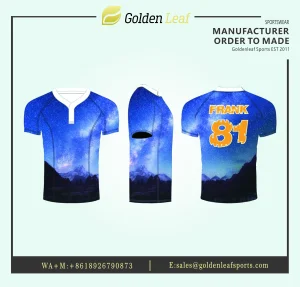
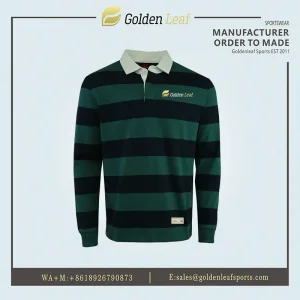
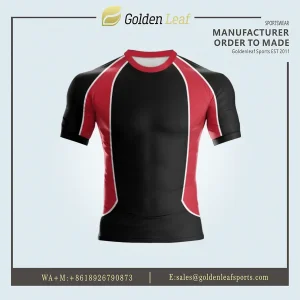
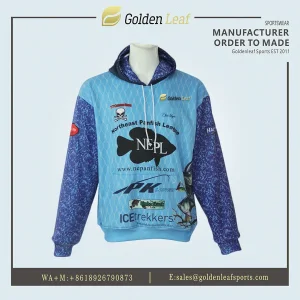
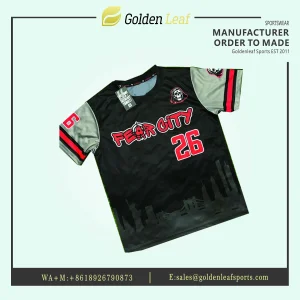
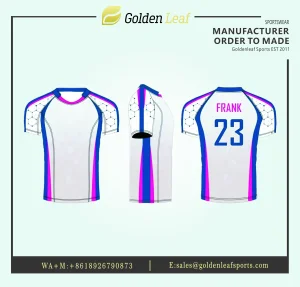
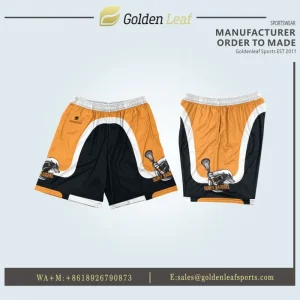
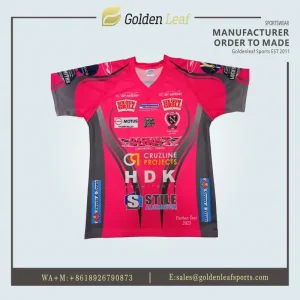
Browse additional custom sublimated team kits, athletic shirts, and specialized performance garments produced in our Shenzhen facility.
Technical guidance for B2B buyers, supply chain managers, and custom sports gear brand directors.