



GoldenLeaf Sports14+ Years Teamwear Manufacturer · Shenzhen, China
GoldenLeaf Sports14+ Years Teamwear Manufacturer · Shenzhen, China
Explore our flagship custom sublimated athletic apparel manufactured with precision thermal mapping, ergonomic cut patterns, and sustainable technical yarns.
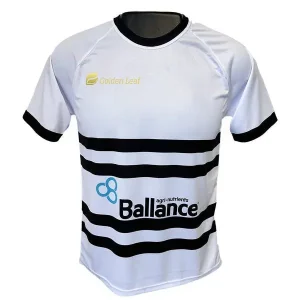
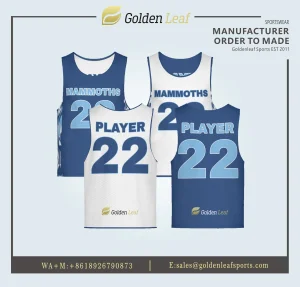
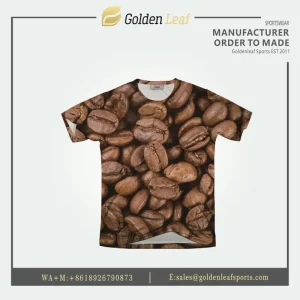
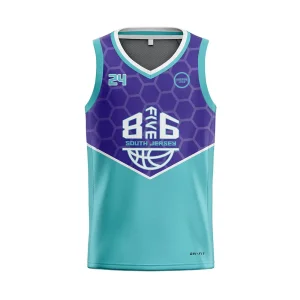
A Macro-Economic & Technological Analysis of Modern Motorsports and Professional Athletic Apparel Sourcing
The global market for professional racing wear and high-performance athletic apparel is experiencing a structural shift. Driven by breakthroughs in textile material science, dynamic aerodynamic modeling, and real-time biometric tracking, high-end customized racing gear has expanded beyond professional motorsports (Formula racing, GT3, motocross, karting) into endurance sports, marine racing, and elite team athletics. According to quantitative market research, the global custom sportswear market is projected to reach $68.7 billion by 2030, registering a Compound Annual Growth Rate (CAGR) of 7.8%.
Central to this expansion is the global demand for Customized Men's Breathable Racing Wear. Professional athletes operating under extreme mechanical thermal stress require garments that perform dual functions: maximizing thermoregulation through fluid micro-ventilation and providing mechanical durability without structural weight penalties. Modern buyers—ranging from international motorsport franchises and athletic brands to high-volume commercial distributors—no longer treat racing apparel as simple promotional merchandise. They demand engineered gear backed by rigorous laboratory testing, verifiable supply chain sustainability, and flexible manufacturing workflows.
Thermoregulation in extreme racing environments is governed by the rate of Latent Heat Exchange via sweat evaporation. Traditional dense polyester fabrics create an impermeable vapor boundary layer next to the skin, causing thermal buildup, elevated core temperatures, and premature fatigue. Advanced breathable racing wear utilizes dual-knit micro-channel constructions that leverage capillary pressure—pulling moisture away from the dermis to the outer surface within milliseconds, accelerating cooling by up to 34% compared to standard synthetic textiles.
Deconstructing the technical parameters that define premium custom racing wear performance: GSM selection, stretch recovery, and sublimation durability.
Engineered using 145-180 GSM high-multi-filament polyester yarn. Features a bird-eye open structure that channels high-speed airflow directly across muscle zones while maintaining tensile strength under high abrasion.
Formulated with an 88/12 elastomer ratio providing 360-degree anatomical flex. Eliminates dynamic drag during cornering and rapid maneuvering, preserving natural motion without fabric bunching or seam stress.
Utilizes eco-friendly imported Italian sublimation inks bonded at 210°C into the core fiber matrix. Guarantees fade-resistant graphics (Grade 4+ fastness) that do not inhibit fabric porosity or airflow performance.
| Performance Metric | Standard Commercial Sportswear | Engineered Men's Racing Wear (GoldenLeaf Standard) | Impact on Performance |
|---|---|---|---|
| Moisture Evaporation Rate | 2.8 g/m²/hr | 8.4 g/m²/hr | 3x faster drying; eliminates post-exertion chill. |
| Air Permeability (CFM) | 120 CFM | 280+ CFM | Dramatically reduces micro-climate humidity under gear. |
| Tensile Burst Strength | < 350 kPa | > 780 kPa | Prevents tearing during high-friction crashes or friction. |
| Graphic Weight Addition | +15-25% (Screen/Vinyl Print) | 0% (Molecular Dye Sublimation) | Zero weight penalty; preserve skin-level breathability. |
| UV Protection Factor | UPF 15+ | UPF 50+ Certified | Blocks 98% of harmful solar radiation during open-track races. |
How Advanced Factory Automation and Vertically Integrated Ecosystems Drive Global Sourcing Advantage
In the contemporary B2B apparel ecosystem, global buyers face dual pressures: compressed product launch cycles and volatile raw material pricing. The traditional paradigm of apparel manufacturing—characterized by fragmented sub-contracting, manual pattern scaling, and long lead times—is insufficient for modern multi-channel distributors. Located in Shenzhen's technology manufacturing cluster, GoldenLeaf Sports represents the modern evolution of Chinese apparel manufacturing: China Industry 4.0 Integration.
Operating out of a 3,000 square meter standardized industrial campus, our facility unifies all core operations under a single quality control framework. By eliminating third-party reliance for digital printing, laser cutting, or seam reinforcement, we maintain 100% oversight across the production vector:
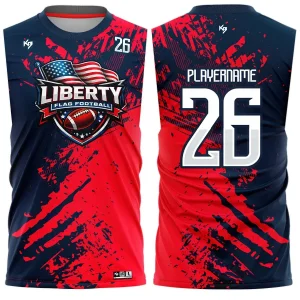
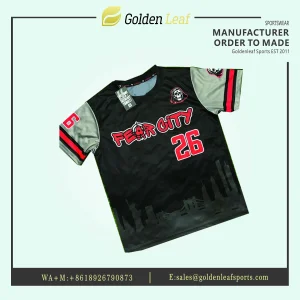
Flexible digital sublimation systems enable flexible volume runs starting at just 10 pieces per design, allowing custom player names, numbers, and sponsor variations within a single production run.
A dedicated team of 5 senior QA inspectors conducts 100% online optical and mechanical checks, evaluating stitch elasticity, dimensional stability after washing, and dye fastness prior to cartoning.
Direct integrated relationships with air and ocean freight carriers enable streamlined FOB Shenzhen, CIF, and DDP shipments to North America, Europe, Australia, and the Middle East.
Custom Breathable Racing Wear Built for Diverse Disciplines, Extreme Environments, and Regional Compliance
Professional racing apparel requires structural adaptation based on environmental stressors, sport-specific body dynamics, and regional market preferences. GoldenLeaf Sports engineers specialized apparel solutions across multiple global commercial domains:
For motocross, karting, and GT racing, garments are engineered using high-denier polyester panels in high-abrasion zones (elbows, shoulders) combined with ultra-breathable underarm micro-mesh. The cut features a forward-articulated sleeves-forward pattern tailored specifically to the racing stance.
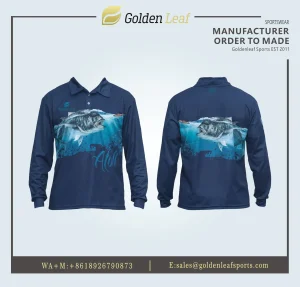
Saltwater exposure and intense solar thermal radiation require specialized UPF 50+ UV-blocking fabrics treated with quick-dry hydrophobic finishes. Moisture is dispersed rapidly across the garment face to prevent salt-crystal clogging of ventilation pores.
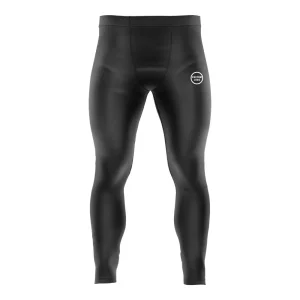
Aerodynamic drag reduction is paramount. Utilizing ultra-lightweight poly-spandex (120-140 GSM) with elastic silicone leg grippers and hidden rear airflow pockets, these garments balance compression with heat dissipation during high-cadence performance.
For international sportswear brands seeking scalable OEM/ODM partner solutions, we provide comprehensive private-label integration: customized heat-seal neck labels, woven hem tags, custom barcode polybags, and retail-ready packaging.
Expert Answers to Essential Procurement, Technical Specifications, and Factory Operations Questions
Our baseline standard MOQ is 10 pieces per design for custom sublimated racing jerseys and apparel kits. Because each panel is printed digitally prior to cutting, individual player names, numbers, and custom sizes can be included within the same 10-piece production run at no additional artwork setup charge.
We utilize standardized Pantone Matching System (PMS) color profiles embedded into our high-resolution RIP printing software. All fabric rolls are batch-tested under controlled D65 lighting environments, ensuring color variance remains below ΔE < 1.0 across initial runs and secondary re-orders.
Digital mock-ups and tech packs are finalized within 24 to 48 hours. Physical pre-production samples require 5 to 7 working days. Bulk factory production for orders between 300 to 2,000 units is completed in 12 to 18 working days, followed by expedited air express (3-5 days) or ocean shipping (18-25 days).
Yes. We stock GRS-certified (Global Recycled Standard) recycled polyester yarns (RPET) derived from post-consumer plastic bottles. These eco-textiles deliver identical tensile strength, moisture-wicking capillary rates, and sublimation ink absorption as virgin polyester yarns.