



GoldenLeaf Sports14+ Years Teamwear Manufacturer · Shenzhen, China
GoldenLeaf Sports14+ Years Teamwear Manufacturer · Shenzhen, China
High-grade sublimated kits, quick-dry training gear, and custom athletic wear designed for academies, wholesalers, and global sporting brands.
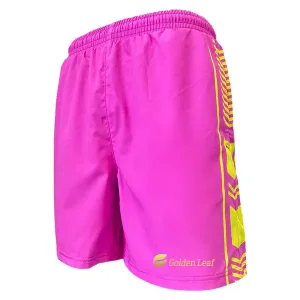
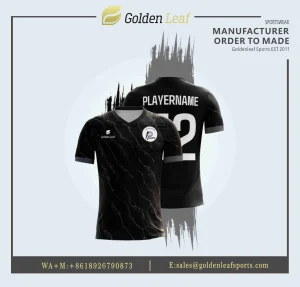
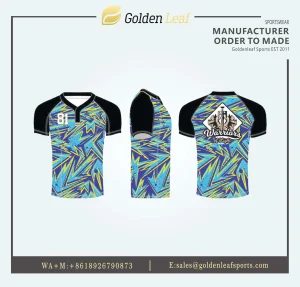
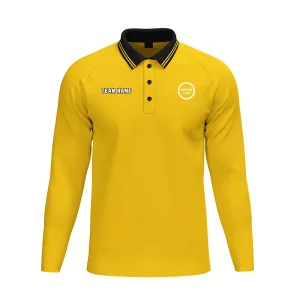
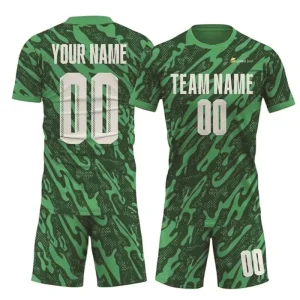
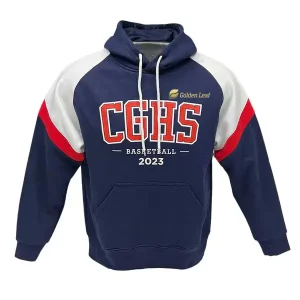
How evolving youth sports participation, physiological protection standards, and digital supply chain transparency are redefining enterprise B2B purchasing.
The global market for early football equipment—encompassing specialized apparel, agility gear, junior training bibs, protective base layers, and grassroots team kits—has experienced a structural paradigm shift. Traditionally, youth and early-stage football academies relied on scaled-down adult equipment. However, contemporary biomechanical research demonstrates that young athletes require dedicated gear designed specifically for their physical developmental stages.
Early-stage players experience higher heat accumulation relative to body weight, higher friction sensitivity on cutaneous tissues, and distinct motor pattern development. Consequently, global enterprise buyers—ranging from national sports federations and regional school districts to commercial brand distributors—are mandating strict compliance parameters. Equipment must feature lightweight polymer density (typically 145 to 180 GSM), rapid moisture dissipation (vapor transport speed > 0.15 g/cm²·h), non-abrasive flatlock seam construction, and non-toxic, eco-certified ink formulations.
In response to volatile international shipping logistics and unpredictable seasonal demand cycles, procurement heads are migrating away from fragmented multi-vendor models toward vertically integrated manufacturing hubs. When sourcing wholesale early football equipment, relying on separate vendors for fabric knitting, panel cutting, sublimation dye transfer, and QA assembly introduces structural bottlenecks and color variance across product lots.
Vertically integrated production ecosystems, such as China’s advanced Guangdong apparel clusters, resolve these friction points by housing pattern development, digital raster image processing (RIP), automated laser cutting, heat-press sublimation, and AQL 2.5 quality control within unified manufacturing campuses. This technological consolidation enables rapid prototyping cycles within 24 to 48 hours and bulk shipping schedules within 12 to 18 working days.
A deep dive into how Shenzhen and Guangdong's high-tech apparel clusters deliver technical precision, material innovation, and unmatched cost-to-quality efficiency.
Utilizing high-precision Japanese Epson & Mimaki printhead engines coupled with imported Italian eco-ink matrices. Ensures molecular dye transfer into polyester fibers at 210°C, delivering zero fade, zero peeling, and grade 4+ wash fastness without blocking fabric breathability pores.
Automated CAD/CAM pattern software computes physiological dynamic tension zones across various youth age brackets (6Y to 16Y and adult sizing). Laser contour-cutting systems eliminate edge fraying while maintaining millimeter-accurate panel registration across complex multi-color designs.
Every batch of early football jerseys, shorts, and training bibs passes through a 5-tier inline inspection protocol: raw yarn tension check, post-sublimation color fidelity verification, seam tear-strength stress testing, dimensional tolerance checking, and final barcode packaging validation.
| Technical Performance Metric | Standard Off-the-Shelf Gear | GoldenLeaf Early Football Equipment Baseline | International Test Standard |
|---|---|---|---|
| Fabric Composition | Generic 100% Recycled Poly Mesh | Engineered Micro-Birdseye / 4-Way Poly-Spandex Blend | ISO 1833 Garment Analysis |
| Moisture Vapor Transmission (MVTR) | 800 – 1,100 g/m²/24hr | 2,400 – 3,200 g/m²/24hr (Cool-Max Hydrophobic Yarns) | ASTM E96 Procedure B |
| Color Fastness (Perspiration & Light) | Grade 2.5 – 3.0 | Grade 4.5 (Eco-Friendly Sublimation Ink) | ISO 105-E04 / ISO 105-B02 |
| Seam Tensile Strength | 120 – 150 N | 280 – 340 N (4-Needle 6-Thread Flatlock Reinforcement) | ISO 13935-2 Seam Properties |
| UV Protection Factor (UPF) | UPF 15+ | UPF 50+ Solar Shield Micro-Knit Treatment | AS/NZS 4399:2017 Standard |
How specialized textile knitting, hydrophobic yarn cross-sections, and advanced digital dye-sublimation empower early football athletes on the pitch.
The primary objective when manufacturing early football equipment is regulating core body temperature during high-intensity interval training. Early football athletes possess underdeveloped sweat glands compared to adults, leading to faster thermal accumulation under direct sun exposure. To mitigate thermal fatigue, our factory utilizes high-gauge micro-interlock and bird-eye knit structures made from extruded polyester filaments with cross-sectional channels.
These channels utilize capillary action to pull liquid moisture away from the dermis to the outer face of the textile, where it evaporates instantaneously. Standard weight metrics for our early football kits range from 140 GSM (lightweight match jerseys) to 220 GSM (durable training bibs & shorts) and up to 280 GSM (reinforced rugby and heavy contact outerwear).
Chafing is one of the leading causes of skin irritation during youth training sessions. Traditional single-needle or chain-stitched seams create raised interior ridges that rub against sensitive skin. By implementing 4-needle 6-thread flatlock machines, seam profiles are rendered perfectly flat against the garment interior.
Additionally, critical load-bearing junction points—such as armpit gussets, sleeve insertions, and short inseams—are reinforced with automated bar-tacking. This prevents seam blowout under severe dynamic stretching during slide tackles, sprints, and competitive physical drills.
High-resolution artwork, gradient designs, team emblems, and variable player numbers are gaseous-bonded into the polyester yarn matrix. Unlike traditional rubberized screen printing or heat-transfer vinyl, dye-sublimation leaves no heavy layer on top of the fabric. The result is a 100% breathable surface with zero skin irritation and complete immunity to cracking, peeling, or fading through commercial laundering.
To reduce equipment expenditure for grassroots academies, we manufacture dual-layer reversible training jerseys and pinnies. By bonding ultra-lightweight 110 GSM micro-mesh layers back-to-back using flatlock perimeter binding, academies receive two full colorways inside a single lightweight garment, perfect for scrimmage drills and home/away match day rotations.
Tailored OEM, ODM, and Private-Label programs engineered for international brand distributors, regional academies, and retail chains.
Procuring wholesale early football equipment on an international scale requires a partner capable of accommodating complex custom branding demands while adhering to strict shipping timelines. Our factory operates under modular manufacturing protocols designed to serve three core buyer profiles:
Explore our broader portfolio of teamwear, sublimated performance shirts, specialized socks, and outdoor athletic apparel.
Expert guidance on minimum order quantities, customization workflows, lab testing certifications, and international logistics protocols.